Tropical Contemporary Design
by Samma Studio
July 30, 2026
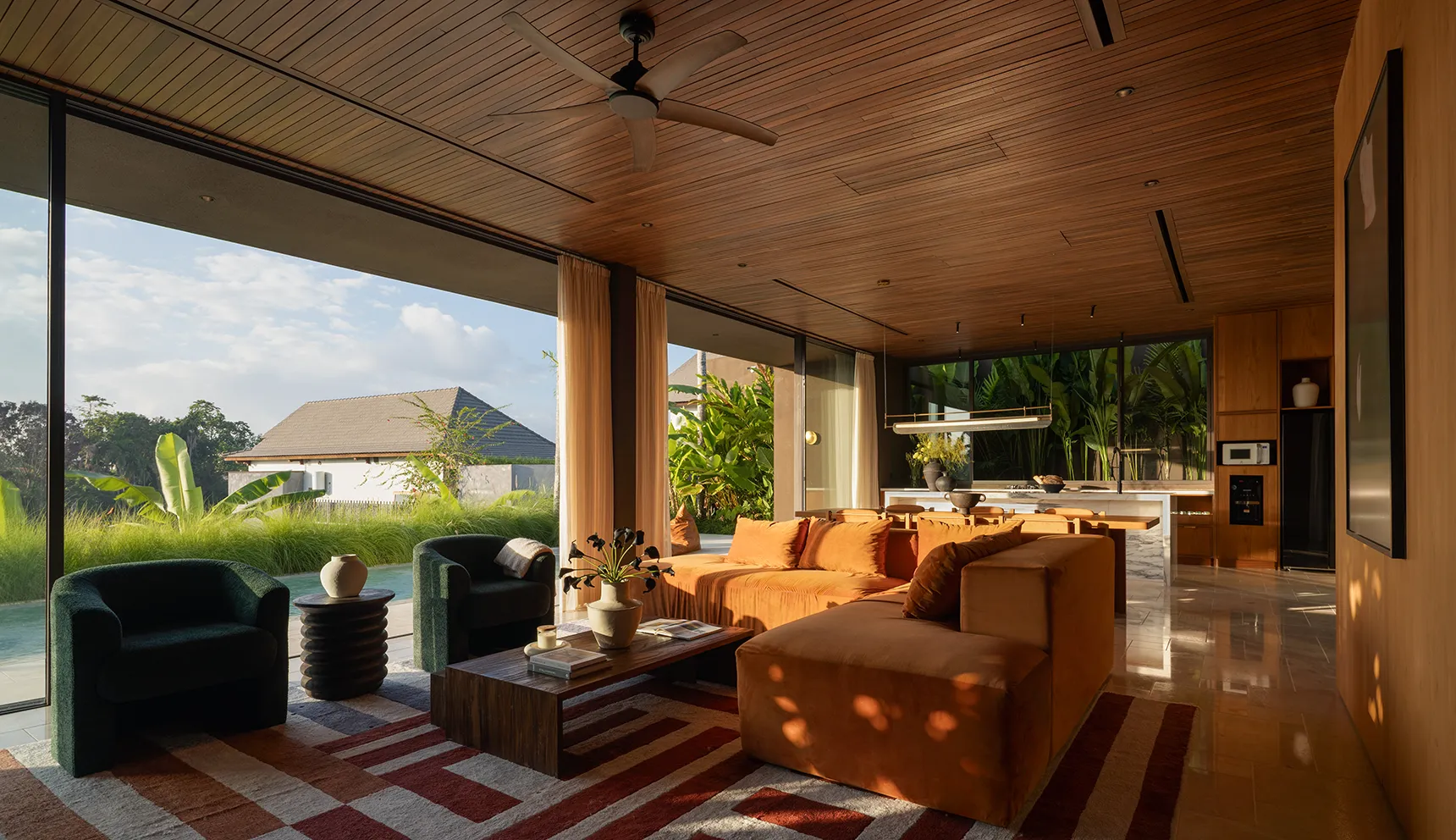
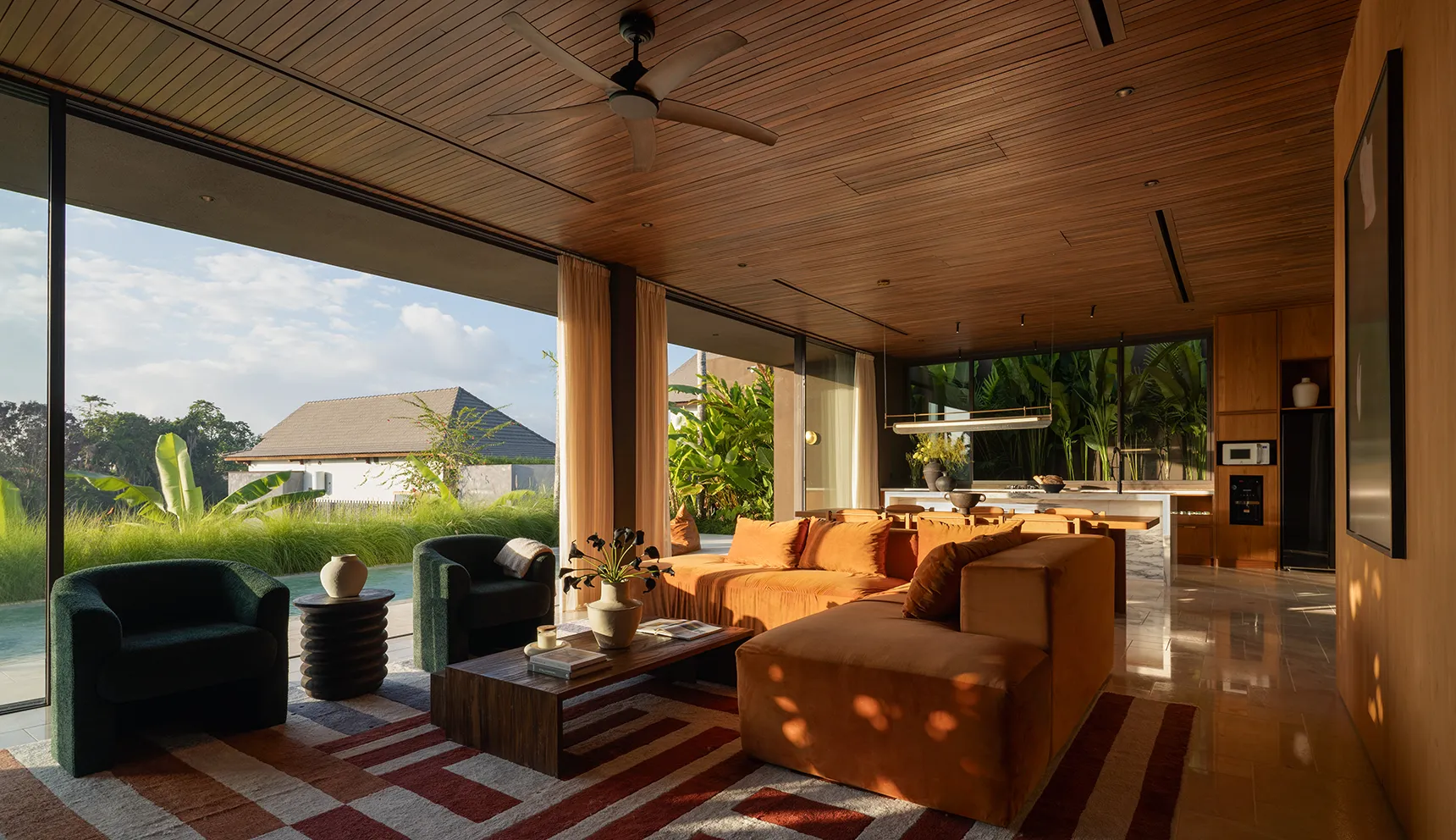
When you step into a tropical contemporary design space, you feel something shift. Natural light moves across clean architectural lines, fresh air flows through thoughtfully positioned openings, and indoor spaces feel naturally connected to the outdoors. The result is an environment that feels distinctly modern while remaining grounded in its tropical setting.
Tropical contemporary architecture combines contemporary aesthetics with climate-responsive design, creating spaces that respond to natural conditions, everyday living, and the surrounding landscape. From private residences to luxury villas and hospitality projects, this approach brings together simplicity, functionality, and a strong connection with nature.
In Bali, where sunlight, humidity, heavy rainfall, and outdoor living shape the way buildings are experienced, good design requires more than a modern appearance. It requires an understanding of how architecture performs within its environment.
At Samma Studio, this approach brings together modern architectural principles, material sensitivity, and an understanding of how people experience a space. Rather than applying a fixed style, each project responds to its site, its purpose, and the people who will use it.
For those planning a home or villa in Bali, understanding these principles can help establish a clearer design direction before construction begins. Choosing the right architecture studio in Bali can also help translate these ideas into a cohesive and carefully considered project.
What Is Tropical Contemporary Architecture?
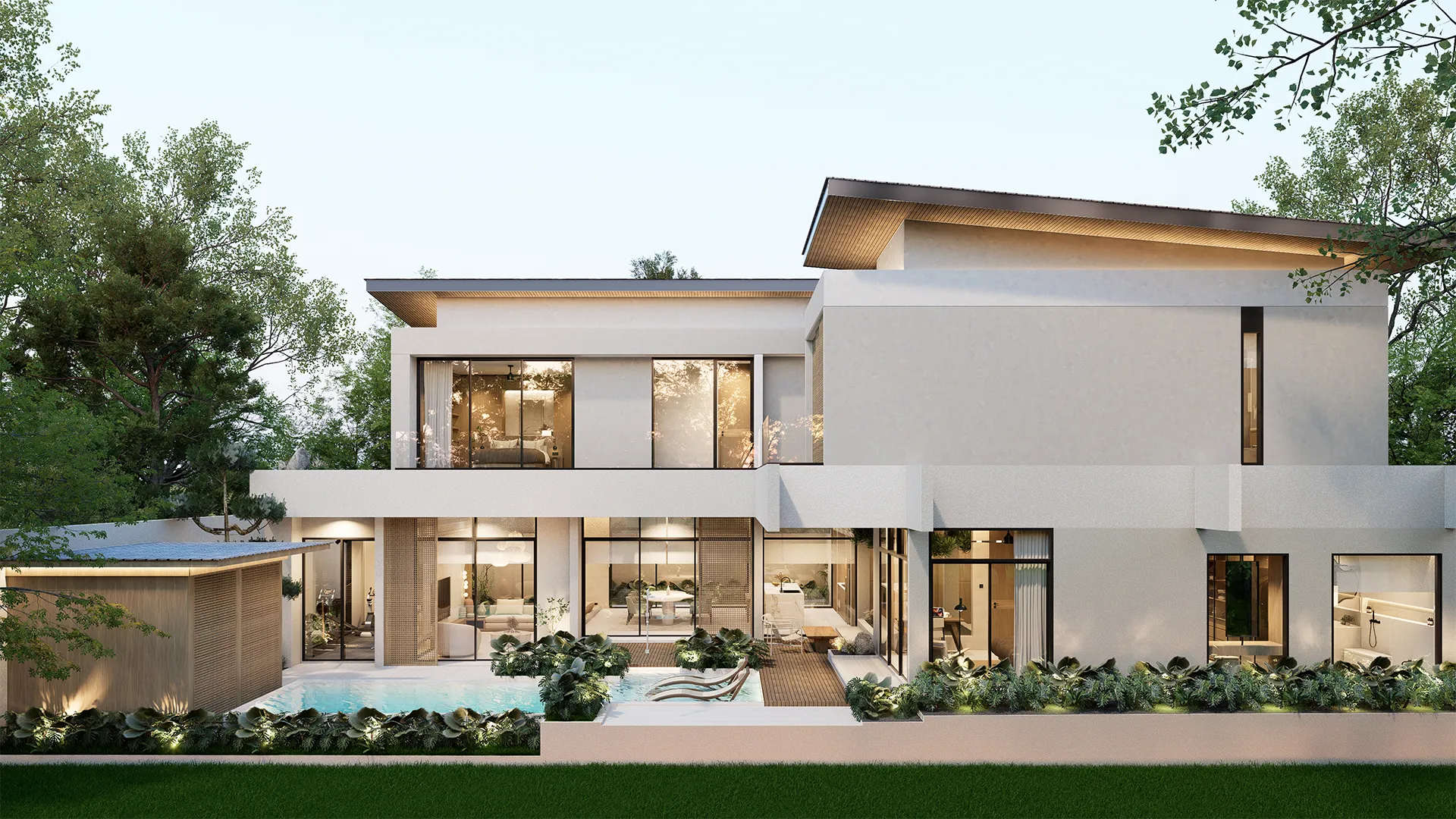
Tropical contemporary design is an architectural approach that combines modern design principles with responses to tropical climate and lifestyle. It emphasises clean forms, functional layouts, natural materials, passive design strategies, and a close relationship between indoor and outdoor spaces.
Rather than relying on a particular decorative style, it focuses on how architecture looks, feels, and performs in its surroundings.
Its defining characteristics include:
-
Climate-responsive planning: Building orientation, shading, ventilation, and rain protection are considered from the earliest design stages.
-
Contemporary architectural forms: Clean lines, considered proportions, and purposeful detailing create a refined visual language.
-
Natural materials: Timber, stone, concrete, and other suitable materials introduce texture and connect the building with its context.
-
Indoor-outdoor living: Courtyards, terraces, gardens, and semi-open spaces extend the living experience beyond enclosed rooms.
-
Integrated landscape: Vegetation, views, and outdoor circulation are considered alongside the architecture rather than added at the end.
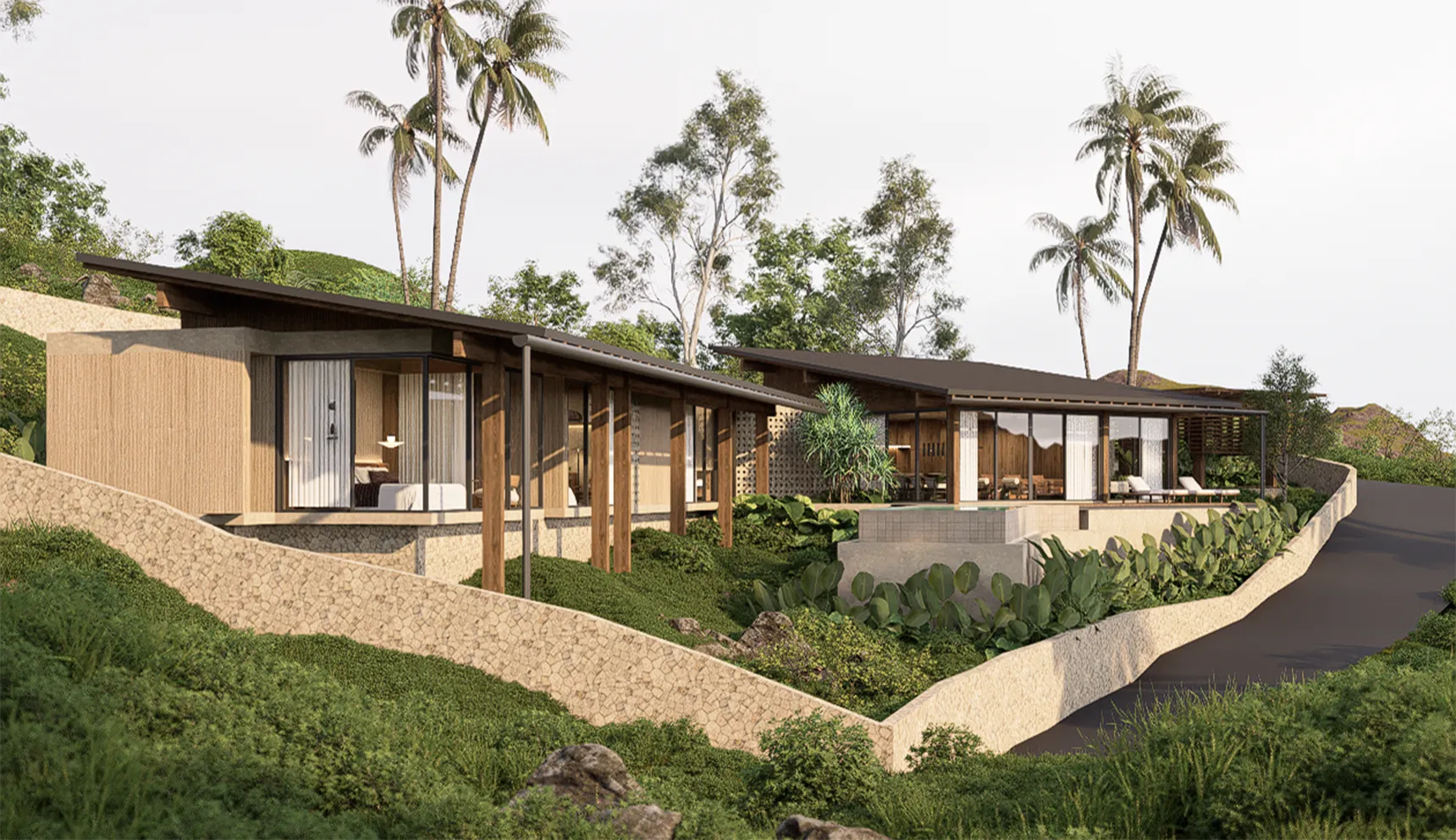
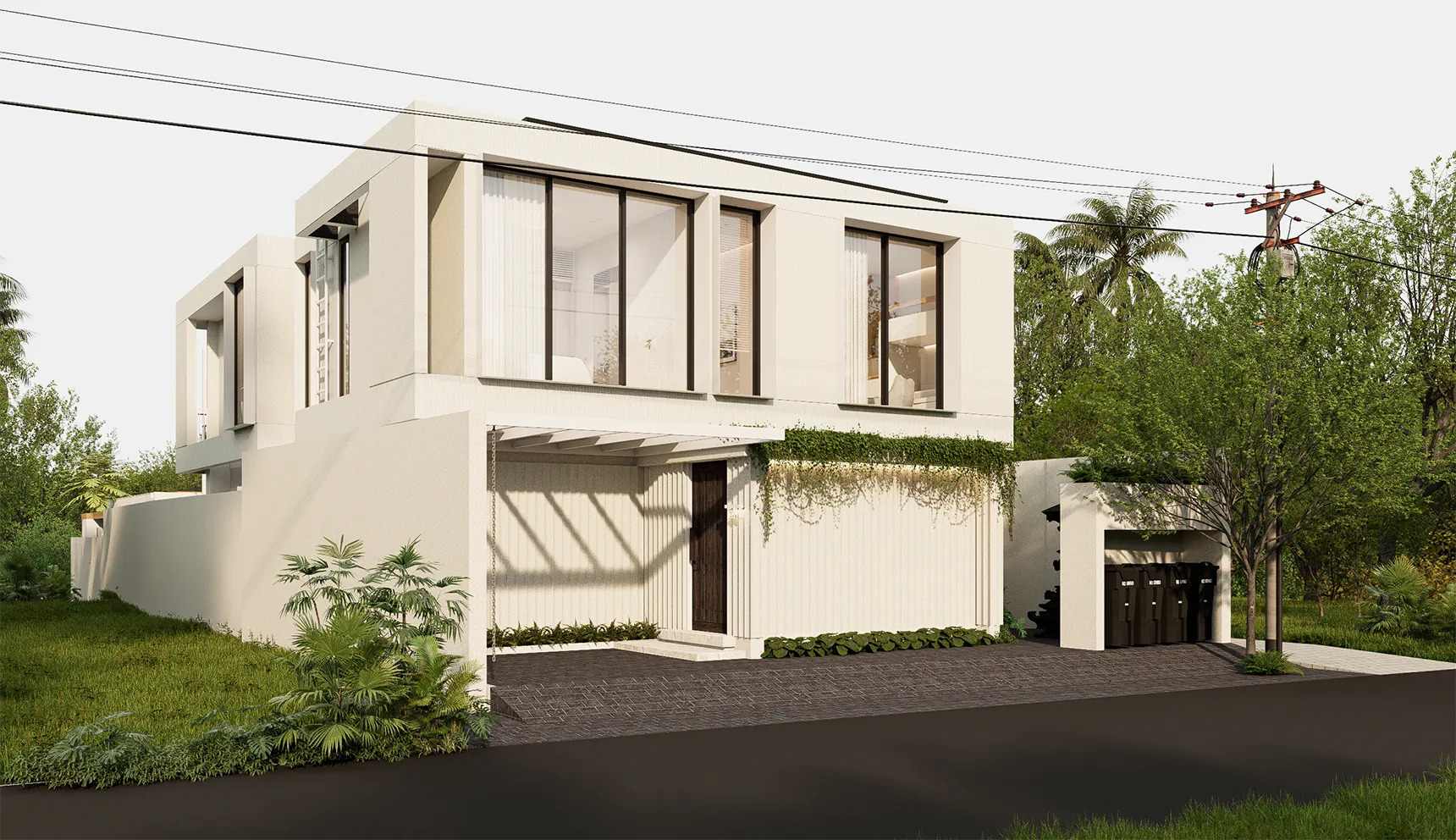
These characteristics can be interpreted in different ways depending on the site and project requirements. A tropical contemporary villa in Bali, for example, may feature open pavilions and shaded courtyards, while a more enclosed residence may prioritise privacy, controlled daylight, and carefully positioned openings.
The common principle is that contemporary aesthetics and environmental performance should work together
Key Principles of Tropical Contemporary Architecture
Tropical contemporary architecture is not defined by a single formula. Its success depends on how architectural form, material selection, environmental conditions, and everyday use are brought together
1. Climate-Responsive Orientation and Passive Design
Building orientation influences heat gain, daylight, shading requirements, and the comfort of outdoor spaces. In Bali, western exposure can introduce significant afternoon heat, while heavy rainfall and changing wind conditions also influence how openings, roofs, and covered areas should be designed.
Passive design strategies help address these conditions before relying on mechanical systems. Depending on the site, these may include:
-
Positioning major openings to encourage natural airflow.
-
Using roof overhangs and external shading to manage direct sunlight.
-
Placing outdoor living areas where they receive appropriate shade and protection.
-
Designing roofs and drainage systems to manage heavy rainfall.
-
Selecting materials and building assemblies that respond to local temperature and moisture conditions.
Natural ventilation can improve comfort when the building layout, outdoor conditions, and airflow paths support it. However, it is not a complete substitute for mechanical cooling in every room or during every weather condition.
The goal is to make informed design decisions that improve comfort while reducing unnecessary energy demand.
For a more detailed explanation of these strategies, explore our guide to tropical architecture in Bali.
2. Natural Materials and Long-Term Durability
Timber introduces warmth, natural stone establishes a connection with the landscape, and concrete can provide a clean architectural expression. When used together, these materials create a balance between contemporary simplicity and the tactile qualities of a tropical environment.
Material selection, however, involves more than appearance.
Bali's humidity, rainfall, intense sunlight, and coastal salt exposure can affect the performance and maintenance requirements of different materials. Timber may require appropriate treatment and periodic maintenance, metals need suitable corrosion protection, and concrete requires careful detailing to manage moisture and weather exposure.
The most appropriate material palette depends on the project's location, exposure, construction methods, and intended use.
Local materials can also strengthen a building's relationship with its surroundings when they are responsibly sourced and technically suitable. Their value lies not simply in appearing natural, but in contributing to an architecture that feels considered and appropriate to its context.
This same principle extends to interiors, where material selection helps establish continuity between the building's architecture and the spaces within it. Discover more about this relationship in our guide to villa interior design in Bali.
3. Indoor-Outdoor Living
Instead of treating gardens, terraces, and courtyards as separate features, the architecture brings them into the everyday experience of the building. Large openings, covered verandas, open-plan living areas, and carefully positioned views can create a natural transition between inside and outside.
This connection supports several aspects of daily living:
-
Living and dining spaces can open towards gardens or terraces.
-
Covered outdoor areas provide places to gather while offering protection from sun and rain.
-
Courtyards introduce daylight and landscape views into the centre of a building.
-
Carefully planned openings create visual connections between shared and private spaces.
Successful indoor-outdoor design also requires attention to privacy, rain protection, insects, security, and transitions between different floor finishes. Large glass openings, for example, need appropriate shading and ventilation strategies to avoid excessive heat gain.
The objective is not to open every room to the outdoors. It is to create the right relationship between enclosed, semi-open, and open spaces based on their intended use.
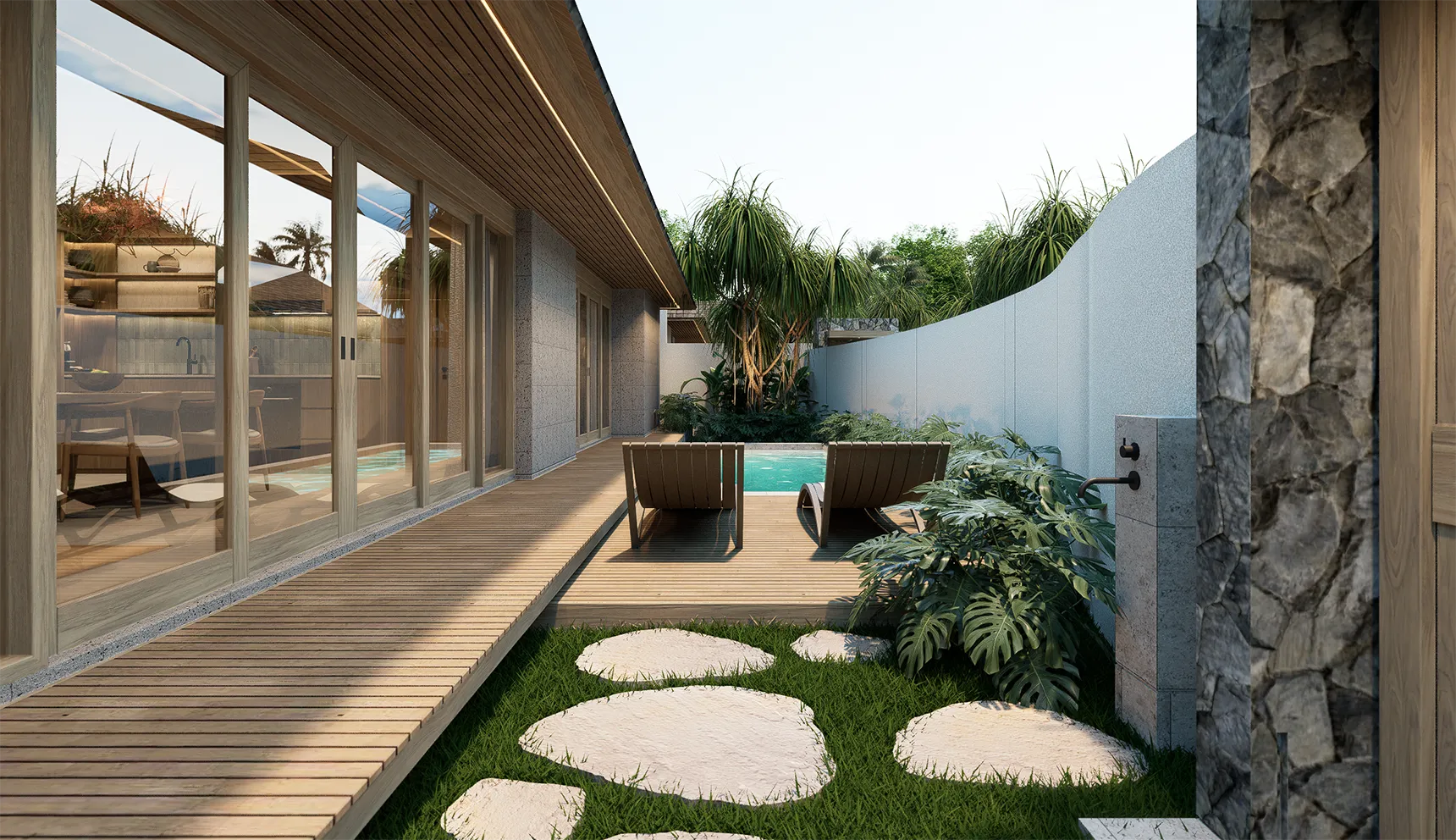
4. Natural Light, Shading, and Cross Ventilation
Natural light and airflow influence how a building feels throughout the day. When considered together, they can improve visual comfort, support ventilation, and create a stronger connection with the surrounding environment.
In tropical contemporary architecture, openings are positioned according to the room's function, orientation, privacy requirements, and exposure to weather.
Cross ventilation occurs when air can move through a space between suitable openings. Its effectiveness depends on wind conditions, opening locations, internal obstructions, and the overall building layout.
Shading is equally important. Deep roof overhangs, recessed windows, screens, and vegetation can reduce direct solar exposure while allowing daylight to enter.
A well-designed space balances these elements rather than maximising any one of them. Large windows may provide expansive views, for example, but their size and orientation should be considered alongside glare, heat gain, and privacy.
These decisions are most effective when integrated into the early architectural design process rather than added as corrections later.
5. Integrated Architecture and Landscape
In tropical contemporary design, landscape is part of the architectural composition.
Trees can provide shade, planting can soften building forms, and gardens can create transitions between shared and private spaces. The placement of vegetation also influences views, privacy, daylight, and the experience of moving through a property.
Water features, swimming pools, and courtyards may contribute to the spatial experience, but their role should be considered in relation to the overall design rather than treated as isolated luxury elements.
Landscape planning also involves practical considerations, including drainage, soil conditions, plant suitability, irrigation, and long-term maintenance.
When architecture and landscape are developed together, each can support the other. The result is a building that feels connected to its setting rather than simply positioned within it.
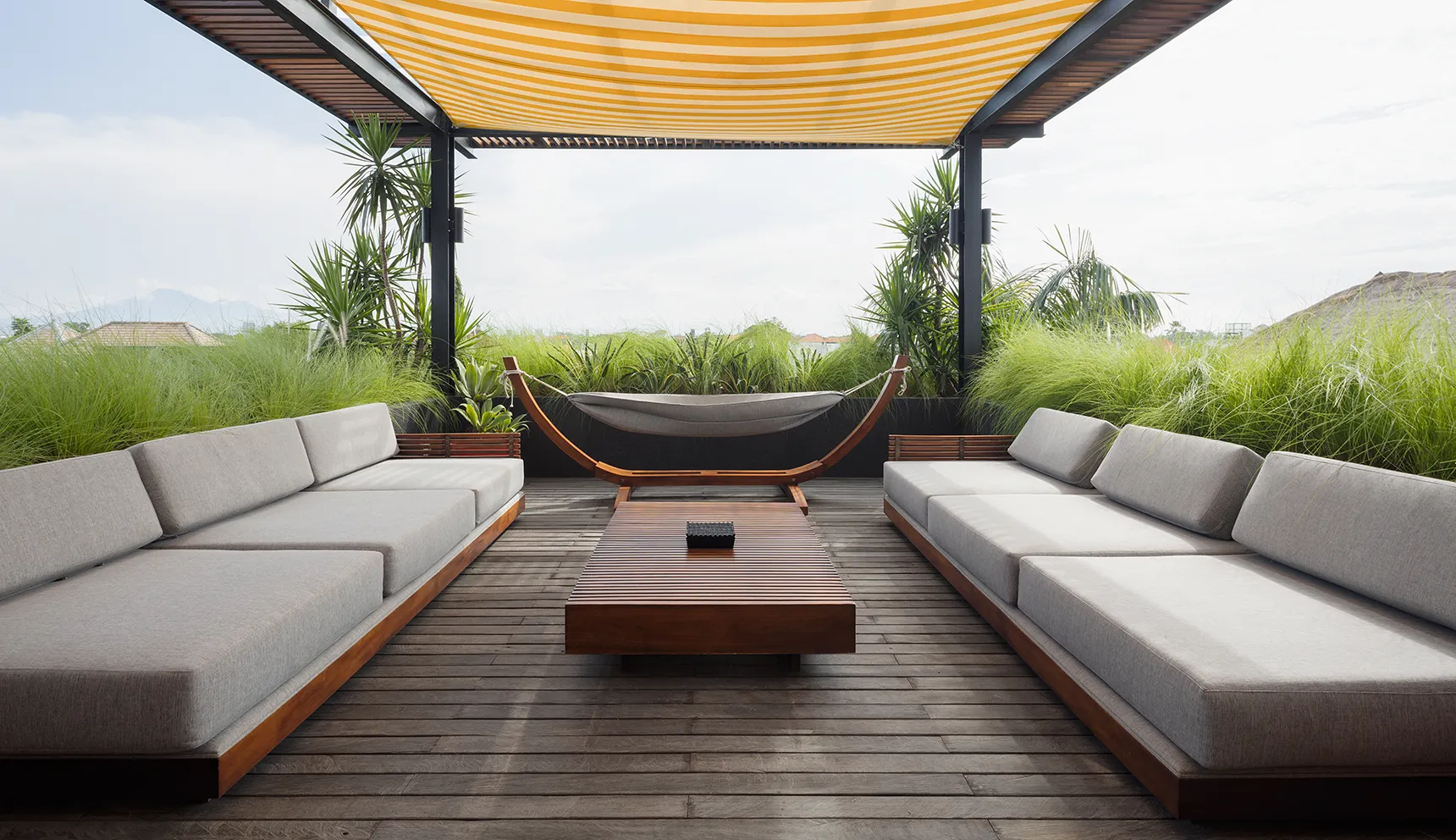
Tropical Contemporary vs. Tropical Modern vs. Tropical Minimalism
Tropical contemporary, tropical modern, and tropical minimalism are related design approaches. They may share clean lines, natural materials, and an emphasis on the relationship between buildings and their environment.
The terms are not always used consistently, and their meanings can overlap. Nevertheless, understanding their typical emphasis can help clarify a project's design direction.
| Approach | Typical emphasis | Design considerations |
|---|---|---|
| Tropical contemporary | Contemporary aesthetics combined with climate-responsive design and modern living requirements | Balances form, function, materiality, comfort, and landscape |
| Tropical modern | Modernist forms and spatial principles adapted to tropical conditions | Often emphasises clear geometry, open planning, shading, and natural ventilation |
| Tropical minimalism | Simplicity, restraint, and a limited palette of forms and materials within a tropical setting | Focuses on reducing visual clutter while maintaining comfort and environmental suitability |
These categories should be understood as broad descriptions rather than strict architectural classifications. A single project may combine characteristics from all three.
What matters most is how the design responds to the site and the people who use it. Minimal forms can work well in a tropical climate when shading, ventilation, moisture protection, and material performance are properly considered. Likewise, a contemporary design can incorporate local craft, cultural references, and traditional spatial principles without losing its modern character.
For a broader understanding of how these decisions contribute to successful architecture, read our guide to architectural design principles.
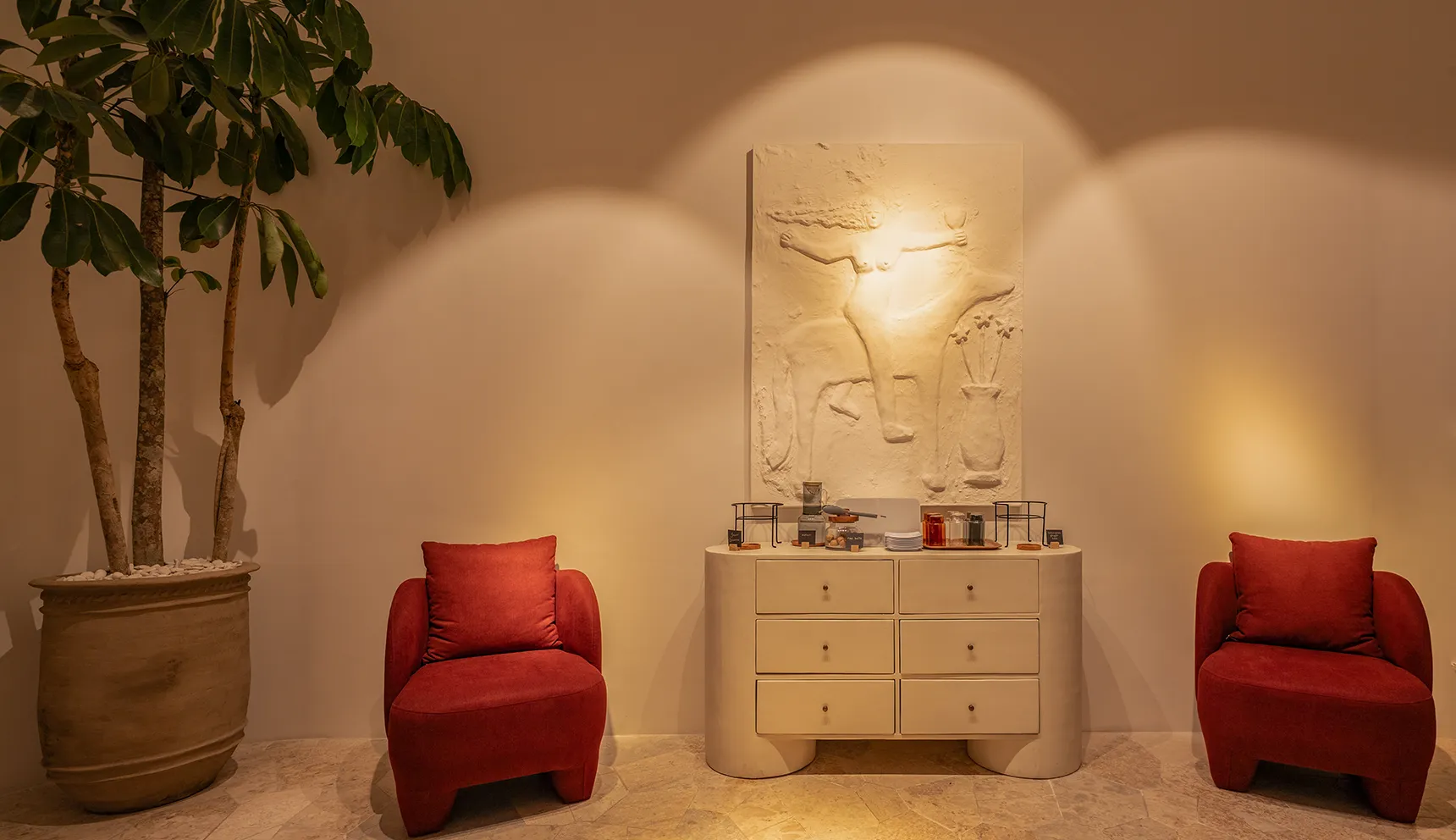
How to Apply Tropical Contemporary Design to a Home or Villa
Applying tropical contemporary principles begins with understanding the project rather than selecting a visual style.
Before deciding on materials, finishes, or architectural features, consider the site's conditions, the way the building will be used, and the experience you want each space to create.
Choosing Materials for Tropical Conditions
Begin by evaluating how different materials will perform in their intended locations.
A timber screen exposed to direct sunlight and rain may require different treatment from timber used in a protected interior. Natural stone used around a pool should be assessed for slip resistance, water exposure, and maintenance. Metal components in coastal environments may need additional corrosion protection.
A consistent material palette can create visual harmony, but each selection should also meet the technical demands of the site.
Designing Roofs, Openings, and Outdoor Spaces
Roof forms and openings influence the building's appearance as well as its response to sunlight and rain.
Deep overhangs can protect façades and create shaded outdoor areas. Operable windows may encourage airflow, while covered terraces provide flexibility for everyday activities. The appropriate solution depends on orientation, rainfall exposure, structural requirements, and the intended use of each space.
Outdoor areas should be planned with the same care as interiors. Circulation, seating, lighting, drainage, and privacy all influence how comfortable and practical they become.
Balancing Privacy, Daylight, and Ventilation
A well-designed villa should feel open without sacrificing privacy.
The position of bedrooms, living spaces, windows, and courtyards can help manage views between the building and its surroundings. Screens, planting, recessed openings, and carefully planned circulation can create privacy while maintaining natural light and visual connections.
In some rooms, controlled openings or mechanical ventilation may be more appropriate than fully open layouts. The objective is to find a balance that supports the intended use of the space.
Integrating the Building with Its Landscape
The site should inform the architectural concept from the beginning.
Existing trees, changes in ground level, views, neighbouring buildings, and access routes can all influence the placement and orientation of the building. Retaining suitable vegetation and responding to the natural topography may also help create a stronger relationship with the site.
Rather than treating landscape as the final layer of a project, consider it alongside the building's form, circulation, and outdoor living areas.
Tropical Contemporary Design in Bali
Bali offers a distinctive context for tropical contemporary architecture. Its climate, vegetation, cultural heritage, and outdoor lifestyle influence how homes and hospitality spaces can be designed and experienced.
A successful approach should respond to the specific conditions of each site rather than applying the same design solution everywhere.
In a coastal setting, salt exposure, wind, sun, and material durability may require particular attention. On a more enclosed or densely developed site, privacy, daylight, and ventilation may become the main design challenges. Sloping land can introduce opportunities for views and spatial variation, while also requiring careful consideration of access, drainage, and construction.
Local context matters beyond climate. The relationship between architecture, landscape, materials, craftsmanship, and the way people use a space can help create a design that feels appropriate to its surroundings.
This is especially important for villas and hospitality projects, where the experience of moving through the building is part of the overall design. Arrival sequences, shared living spaces, private retreats, and outdoor areas should work together as a coherent whole.
At Samma Studio, this approach is guided by an understanding of people, space, and nature. Rather than applying a signature style to every project, the design process responds to the character of the site and the needs of the people who will experience the completed space.
If you are considering a new villa or residential project, our guide on how to choose an architecture studio in Bali explains the importance of local knowledge, a clear design process, and coordinated architectural services.
Designing Beyond Trends
Tropical contemporary design is not simply about creating a modern building with natural materials or expansive glass openings. Its value lies in how architectural decisions work together to support comfort, functionality, and a meaningful relationship with the environment.
Thoughtful orientation, appropriate materials, carefully planned openings, and integrated landscape all contribute to how a building looks and performs over time.
When these principles are considered from the beginning, contemporary architecture can respond to tropical conditions without compromising clarity of form or quality of experience.
At Samma Studio, we approach architecture as a relationship between people, space, and nature. Each project offers an opportunity to translate that relationship into a considered design shaped by its site, purpose, and context.
Explore our architecture projects to discover how different design approaches respond to their surroundings. If you are planning a residence, villa, or hospitality project in Bali, contact our team to discuss your vision.
Frequently Asked Questions
- What is tropical contemporary architecture?
Tropical contemporary architecture combines modern architectural principles with design strategies suited to tropical environments. It typically includes climate-responsive planning, natural ventilation, solar shading, suitable materials, and a strong relationship between indoor and outdoor spaces. - What are the main characteristics of tropical contemporary design?
Common characteristics include clean architectural lines, natural materials, shaded openings, cross ventilation, indoor-outdoor living, and integrated landscape. Their specific application depends on the site's climate, orientation, and functional requirements. - What is the difference between tropical contemporary and tropical modern architecture?
The terms overlap and are sometimes used interchangeably. Tropical modern architecture generally describes modernist design adapted to tropical conditions, while tropical contemporary can encompass a broader range of current architectural expressions that balance aesthetics, functionality, and environmental response. - Why is tropical contemporary design suitable for Bali?
Bali's warm, humid climate and strong relationship with outdoor living make climate-responsive design particularly relevant. Appropriate shading, ventilation, rain protection, material selection, and landscape integration can help create comfortable buildings suited to local conditions. - Is tropical contemporary architecture sustainable?
It can support more sustainable building performance through passive design, natural daylight, ventilation, durable materials, and careful site planning. The overall result depends on the project's design, material sourcing, construction quality, energy systems, and long-term maintenance. - Is tropical contemporary design suitable for luxury villas and resorts?
Yes. The approach can work well for private villas, residences, boutique resorts, and hospitality projects because it combines contemporary aesthetics with attention to comfort, functionality, and the surrounding environment. The design should still be tailored to the property's purpose, site, and operational requirements.