Publication
Villa Interior Design in Bali: Creating Modern Tropical Spaces
by Samma Studio
September 11, 2026
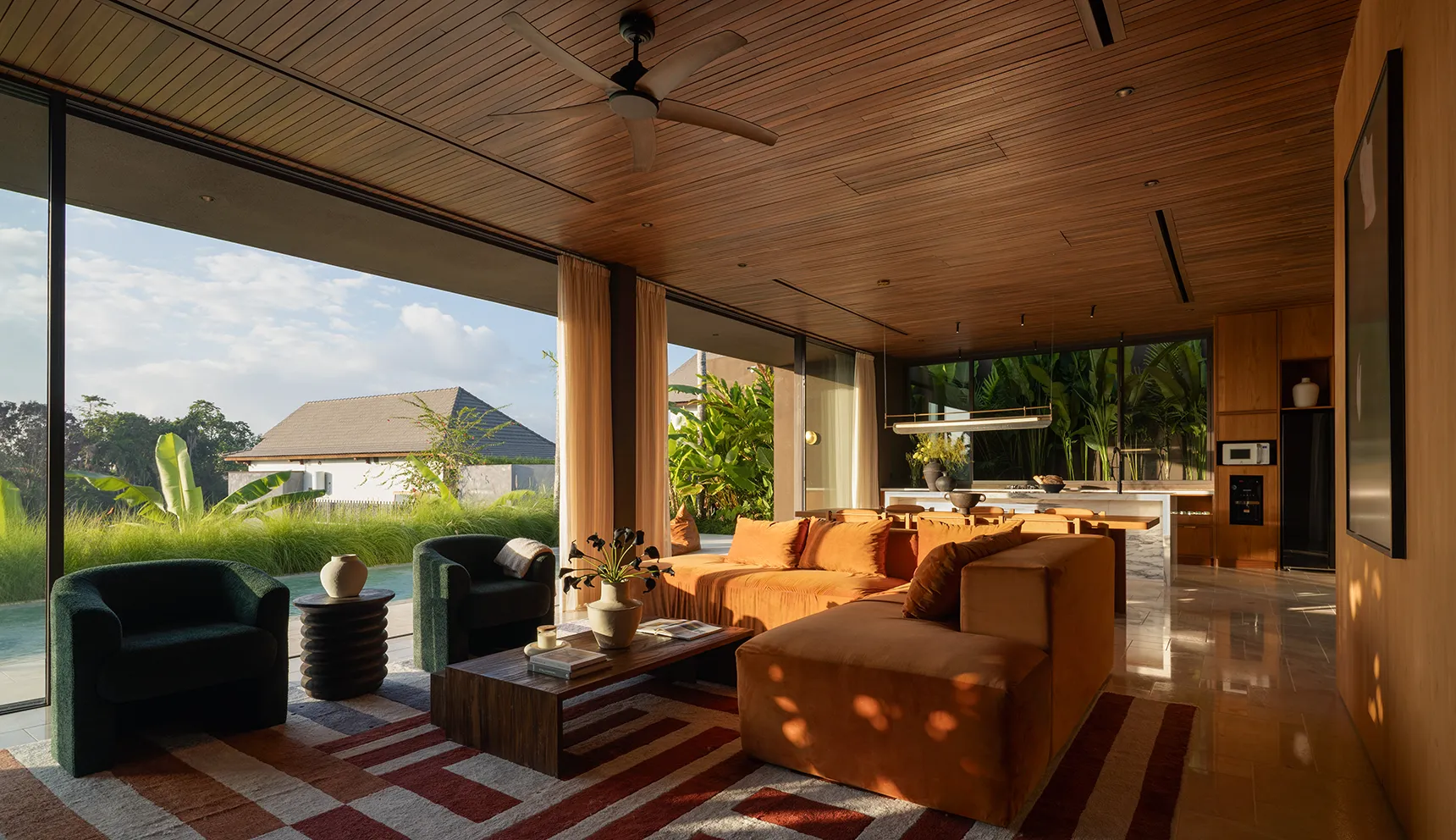
Designing a villa interior in Bali is about more than bringing natural materials, tropical colours, or greenery into a space. A well-designed villa should respond to the way people live, the surrounding landscape, and the tropical environment of the island.
Modern tropical interior design offers a way to bring these elements together. It combines contemporary spatial planning with natural materials, thoughtful details, and a strong connection between indoor and outdoor spaces.
For a Bali villa, this balance is particularly important. The interior needs to feel comfortable and contemporary while still belonging to its surroundings.
What Is Modern Tropical Villa Interior Design?
Modern tropical villa interior design combines contemporary living with the natural qualities of a tropical environment.
Rather than following a fixed decorative style, the approach focuses on how space, light, materials, airflow, and landscape work together. The result can be minimal, warm, refined, or distinctly Balinese, depending on the character of the property and the people who use it.
This is why two villas can both be described as modern tropical while looking completely different.
One may use a restrained palette of timber, stone, and soft textiles. Another may incorporate stronger colours, traditional details, or more expressive materials. What connects them is not a particular look, but the relationship between the interior, the climate, and the surrounding environment.
Samma Studio explores this relationship through its approach to Human, Space, and Nature, creating spaces where functionality and atmosphere are considered together. Explore Samma Studio's design philosophy
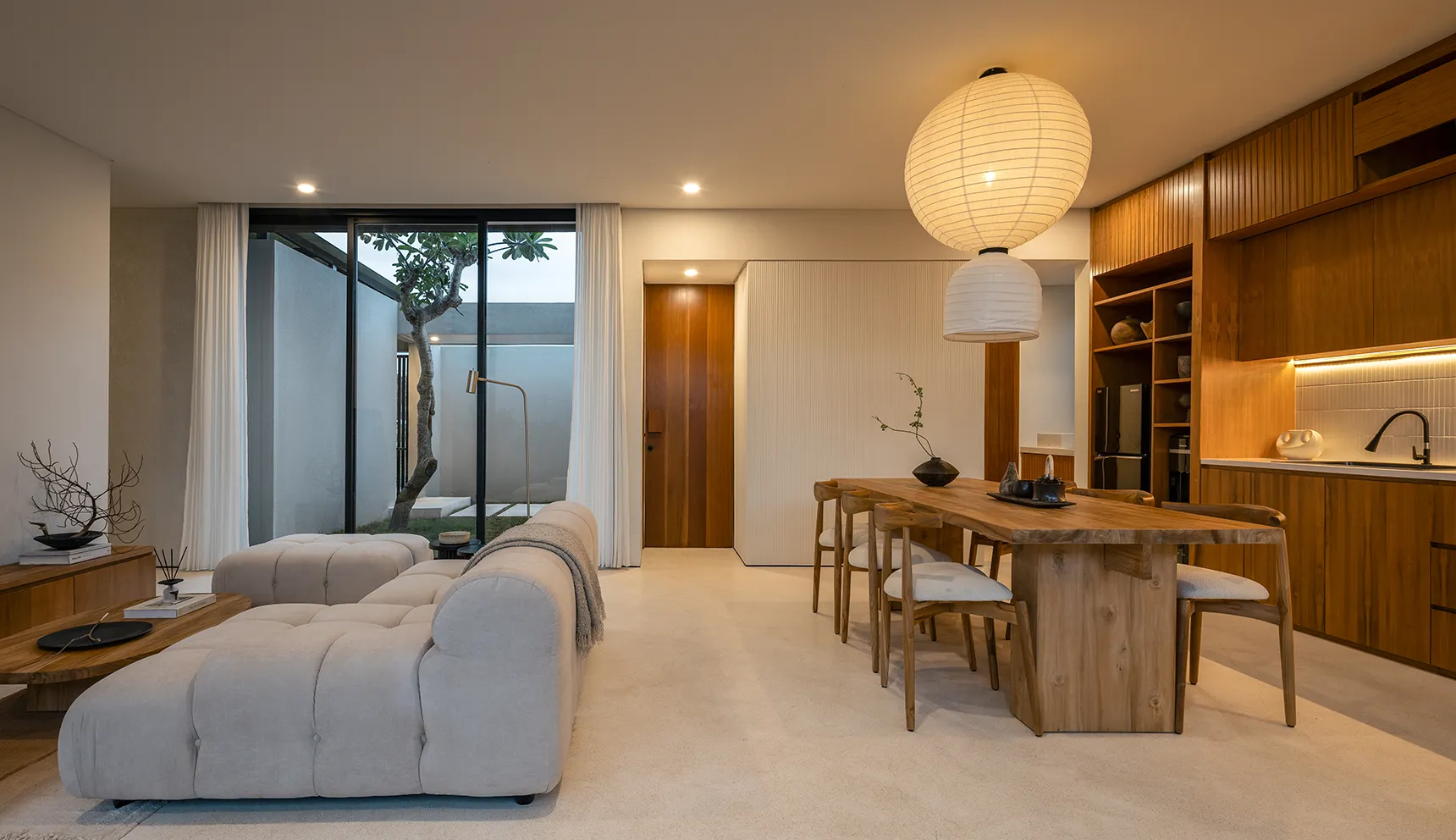
The Principles Behind a Modern Tropical Villa Interior
A successful Bali villa interior is shaped by more than decorative choices. It should respond to the landscape, climate, materials, and the way people use the space.
1. Connect Indoor and Outdoor Spaces
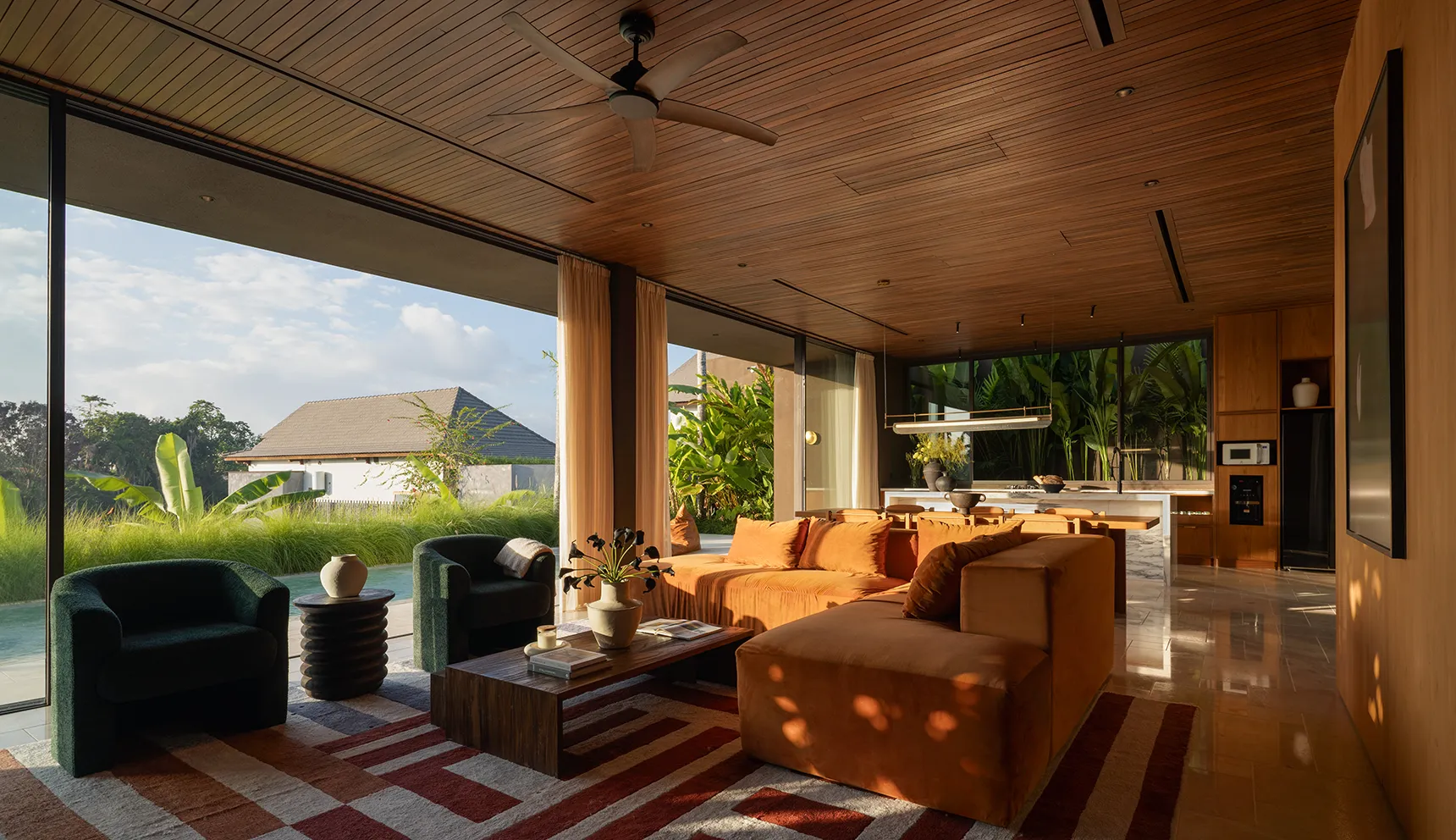
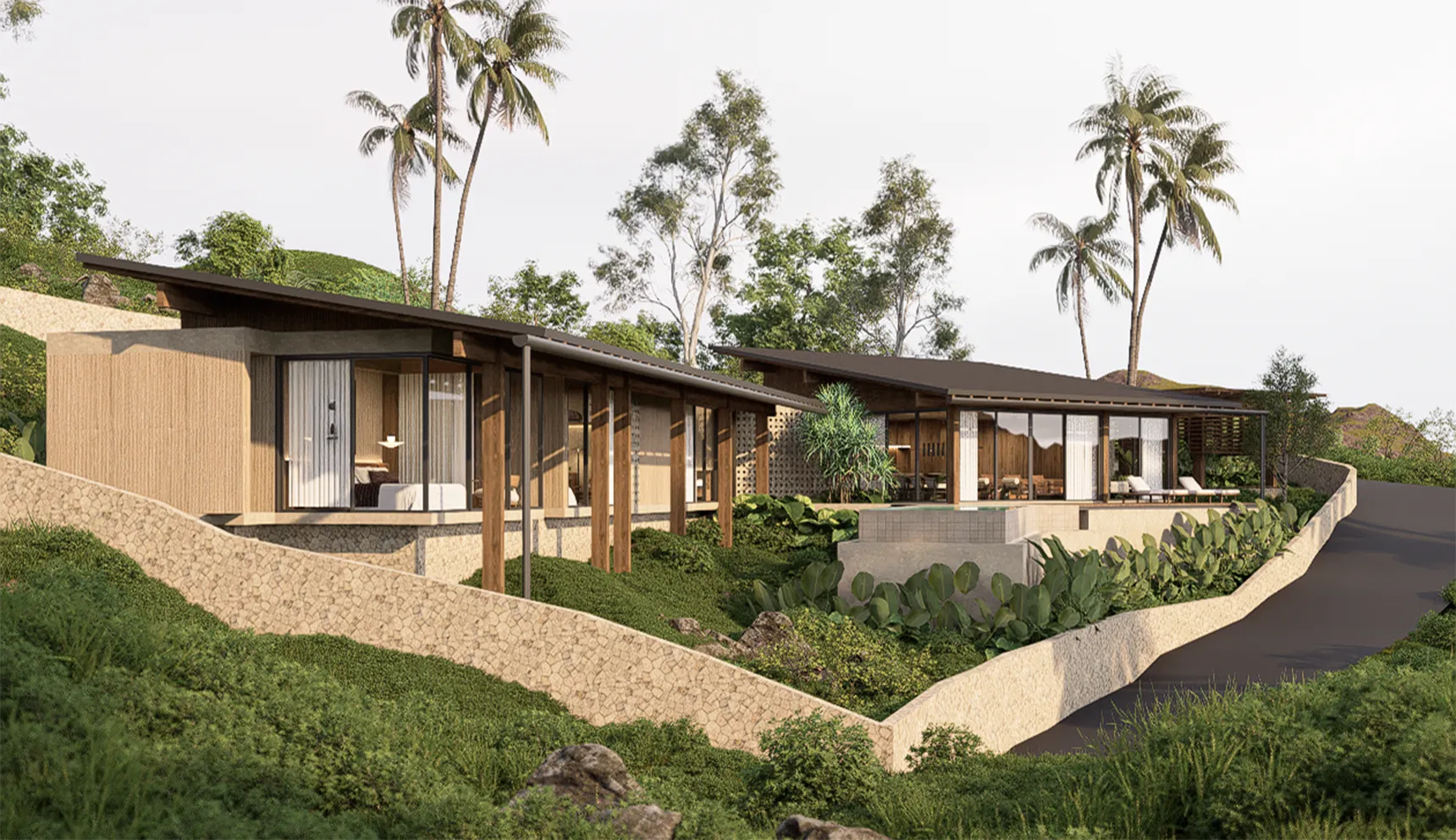
Indoor and outdoor areas should feel naturally connected. Gardens, pools, terraces, courtyards, and carefully positioned openings can extend the living experience beyond the walls. At Villa Padonan, this relationship is expressed through open and enclosed spaces, natural light, cross-ventilation, and views of the surrounding landscape.
2. Let Natural Light Shape the Space
Natural light can change the atmosphere of a villa throughout the day. Windows, skylights, openings, screens, and shading can be used to control light while highlighting materials and views. After sunset, warm and layered artificial lighting can continue this sense of atmosphere.
3. Choose Materials for Texture and Longevity
Timber, natural stone, terrazzo, cement tiles, and woven materials can bring warmth and texture to a tropical interior. However, materials should also be selected for Bali's climate, maintenance requirements, and how the villa will be used.
4. Design Around How People Live
Good interior design should support everyday life. Furniture placement, circulation, storage, kitchen and dining relationships, and connections between bedrooms and outdoor areas all influence how comfortable and functional a villa feels. For a deeper look at the relationship between the two disciplines, see interior architecture and interior design.
5. Create a Sense of Place
A Bali villa does not need to replicate traditional Balinese interiors to feel connected to the island. Local materials, craftsmanship, landscape, proportions, and selected architectural details can create a stronger sense of place. At Villa Amasora, traditional Balinese character is combined with contemporary details and natural materials to create a more modern interpretation.
Natural Materials That Work Well in Bali Villa Interiors
Material selection can have a major influence on the atmosphere of a villa.
Instead of selecting finishes individually, it is often more effective to develop a coherent material palette from the beginning. This allows the flooring, walls, furniture, cabinetry, and decorative elements to feel like part of the same environment.
1. Timber
Timber can bring warmth and a sense of tactility to a contemporary interior. It can be used for flooring, ceilings, cabinetry, furniture, screens, or smaller architectural details.
The character of timber also changes depending on how it is finished. A lighter natural finish can create a relaxed atmosphere, while darker timber can make a room feel more intimate.
2. Natural Stone
Stone introduces texture and visual weight.
It can be used selectively for walls, floors, bathrooms, kitchen surfaces, or architectural features. In a restrained interior, a textured stone surface can become a focal point without requiring additional decoration.
3. Terrazzo and Cement Tiles
Terrazzo and cement tiles can introduce pattern and texture while remaining compatible with a relatively simple material palette.
Their visual character makes them particularly useful in bathrooms, kitchens, entrance areas, and transitional spaces.
4. Woven and Handmade Materials
Rattan, woven fibres, handmade ceramics, and other crafted elements can soften contemporary architecture.
The key is restraint. A few carefully selected handcrafted elements can give an interior more personality than using tropical references throughout every room.
This material-led approach is also visible in Samma Studio's work at JJ Residence in Bumbak, Bali, where the interior focuses on comfort, functionality, warmth, and tropical character within a contemporary villa setting.
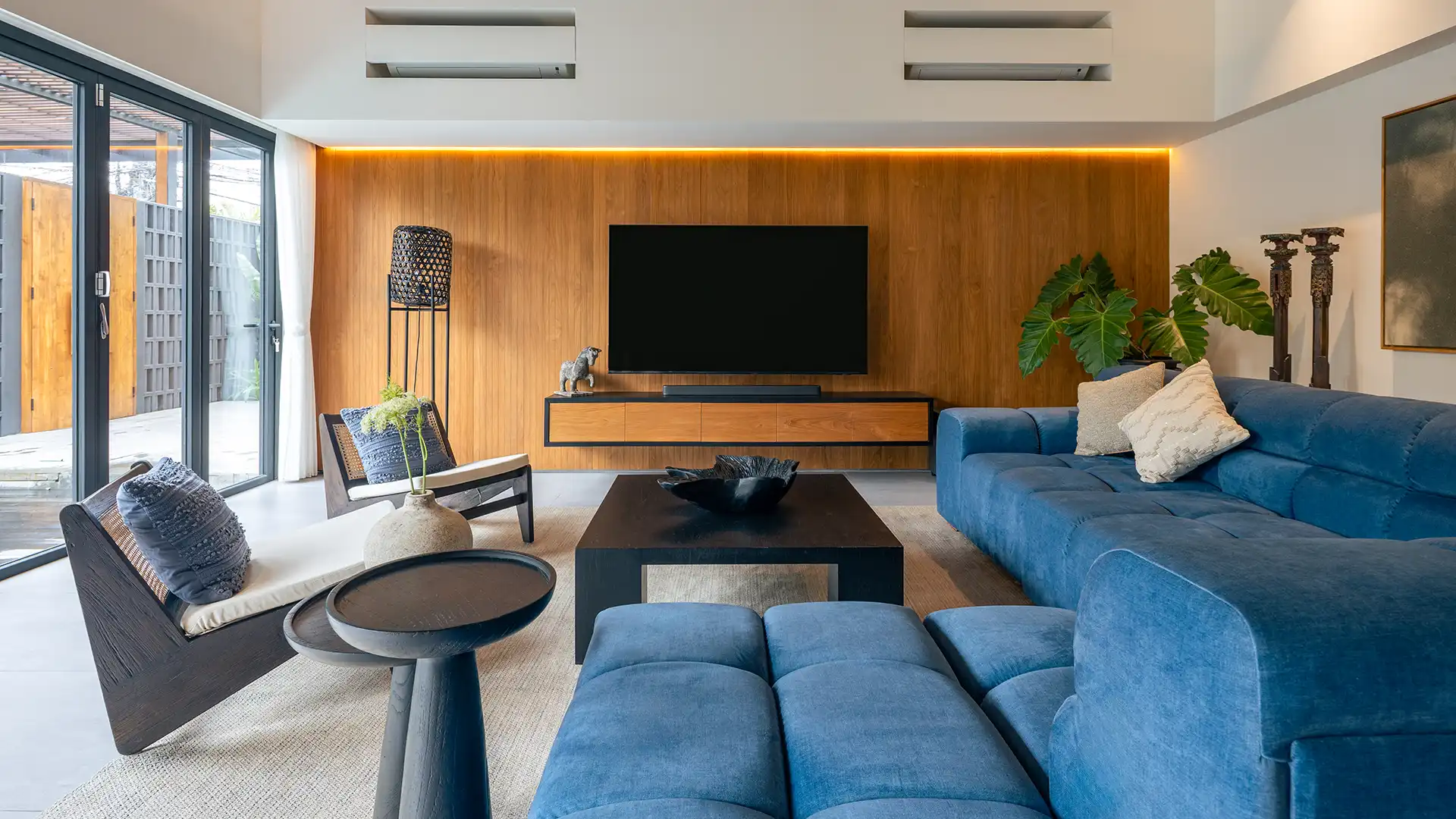
Designing for Bali's Tropical Climate
Bali's heat, humidity, sunlight, and seasonal rainfall should be considered when designing a villa interior. These conditions influence ventilation, shading, material selection, and long-term maintenance.
1. Natural Ventilation
Cross-ventilation can improve airflow and comfort while reducing reliance on mechanical cooling. The placement of openings, room layouts, and ceiling heights all contribute to how air moves through the villa.
2. Shade and Solar Control
Large windows can strengthen the connection with the outdoors, but they also need to respond to heat and direct sunlight. Overhangs, screens, curtains, and vegetation can help control solar exposure while maintaining views and natural light.
3. Materials and Maintenance
Materials should be selected not only for their appearance but also for their performance in Bali's tropical environment. Humidity, exposure, usage, and maintenance requirements should all be considered when choosing finishes for different areas of the villa.
These considerations highlight why interior design should work closely with architecture from the early stages of a project. For a broader look at the villa development process, see How to Build a Villa in Bali.
Modern Tropical Does Not Mean Minimal
There is sometimes a misconception that a modern tropical villa needs to be completely neutral, minimal, and filled with beige tones.
It does not.
Modern tropical design can be expressive. Colour, artwork, patterned tiles, furniture, traditional references, and stronger material contrasts can all have a place when they support the overall concept
What matters is balance.
Villa Lisha in Batu Belig demonstrates another interpretation. Rather than stripping the existing villa back to a minimal palette, Samma Studio introduced warmer colours and subtle accents while retaining elements of the existing character. The design combines contemporary lines with rattan, stone, terrazzo, carved wood, and other tactile materials. Explore Villa Lisha
The result shows that a tropical interior does not need to follow a single visual formula.
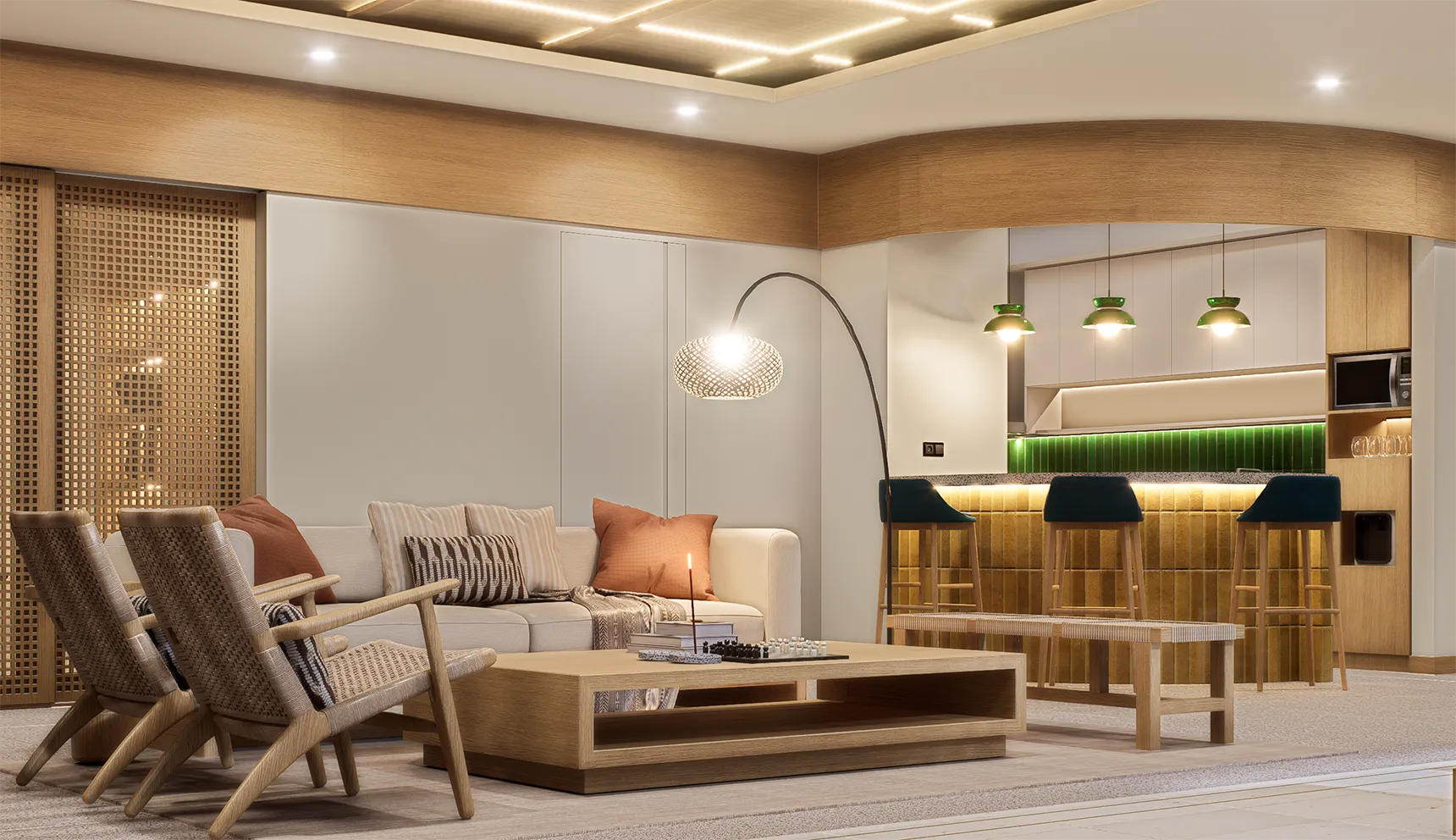
A Modern Tropical Villa Should Feel Connected, Not Decorated
The strongest villa interiors are usually not defined by how many tropical elements they contain.
They work because the different parts of the space support one another.
The architecture creates the framework. Natural light changes the atmosphere. Materials provide texture. Furniture supports the way people live. Landscape extends the experience beyond the walls.
When these elements are considered together, the interior can feel naturally connected to Bali rather than simply decorated with a tropical theme.
Creating a Cohesive Villa Interior, Room by Room
Each room in a Bali villa should have its own function while still feeling connected to the overall design. Consistent materials, textures, colours, and lighting can create this sense of continuity without making every space look the same.
1. Living Areas: Designing for Connection and Comfort
Living areas should encourage both indoor and outdoor living. Furniture can frame views, support conversation, and create an easy transition toward terraces, gardens, or pools. In open-plan villas, thoughtful zoning helps connect the living, dining, and kitchen areas without making them feel like one undifferentiated space.
2. Kitchen and Dining: Part of the Living Experience
The kitchen and dining area can become an important social space in a Bali villa. Timber cabinetry, natural stone, terrazzo, and custom details can help integrate the kitchen with the wider interior while maintaining its practical function.
3. Bedrooms: Creating a Quieter Atmosphere
Bedrooms should provide a sense of privacy and calm. Natural materials, soft textures, warm lighting, and views toward greenery can create a more restful environment. The connection between the bedroom and bathroom can also be designed as a cohesive private retreat. At Villa Amasora, contemporary details are combined with natural materials and preserved Balinese character.
4. Bathrooms: Combining Function and Atmosphere
Bathrooms can introduce texture through materials such as natural stone, terrazzo, and timber. At the same time, moisture, ventilation, drainage, and maintenance need to be considered to ensure the space performs well in Bali's tropical climate.
5. Outdoor Areas as Part of the Interior Experience
Terraces, gardens, and pools can be treated as extensions of the interior rather than separate spaces. At Villa Padonan, open and enclosed spaces work together through natural light, cross-ventilation, and views of the surrounding landscape.
How the Interior Design Process Works for a Bali Villa
A successful villa interior usually starts long before furniture and finishes are selected.
The design process needs to establish the relationship between the property, its users, and the surrounding environment first.
1. Understanding the Property and Lifestyle
The first step is understanding what the villa needs to achieve.
A private residence, holiday home, and rental villa may require very different approaches.
The number of occupants, entertaining habits, privacy requirements, maintenance expectations, and relationship with the landscape all influence the design.
2. Developing the Interior Concept
Once the requirements are understood, the design direction can be developed.
This includes defining the atmosphere, material palette, spatial character, colour direction, and relationship between the different areas of the villa.
The concept provides a framework for later decisions, helping prevent the interior from becoming a collection of unrelated furniture and finishes.
3. Space Planning and Interior Architecture
Space planning determines how people experience the villa.
Circulation, furniture placement, storage, openings, sightlines, ceiling heights, and connections between rooms all contribute to this experience.
For a new-build villa, these decisions should ideally be coordinated with the architectural design rather than developed afterwards.
This is one reason why understanding the relationship between architecture and interior design can be important when planning a villa project.
4. Materials, Finishes, and Custom Elements
The next stage is translating the concept into physical materials.
Flooring, wall finishes, timber, stone, fabrics, cabinetry, hardware, lighting, and furniture need to work as one system.
Custom furniture and joinery can also help make better use of the available space while giving the interior a more distinctive character.
5. Detailing and Implementation
The final design needs to work beyond drawings and visualisations.
Construction details, material specifications, joinery, lighting, and coordination with contractors all affect the finished result.
This is where a strong design concept needs to be supported by careful technical development.
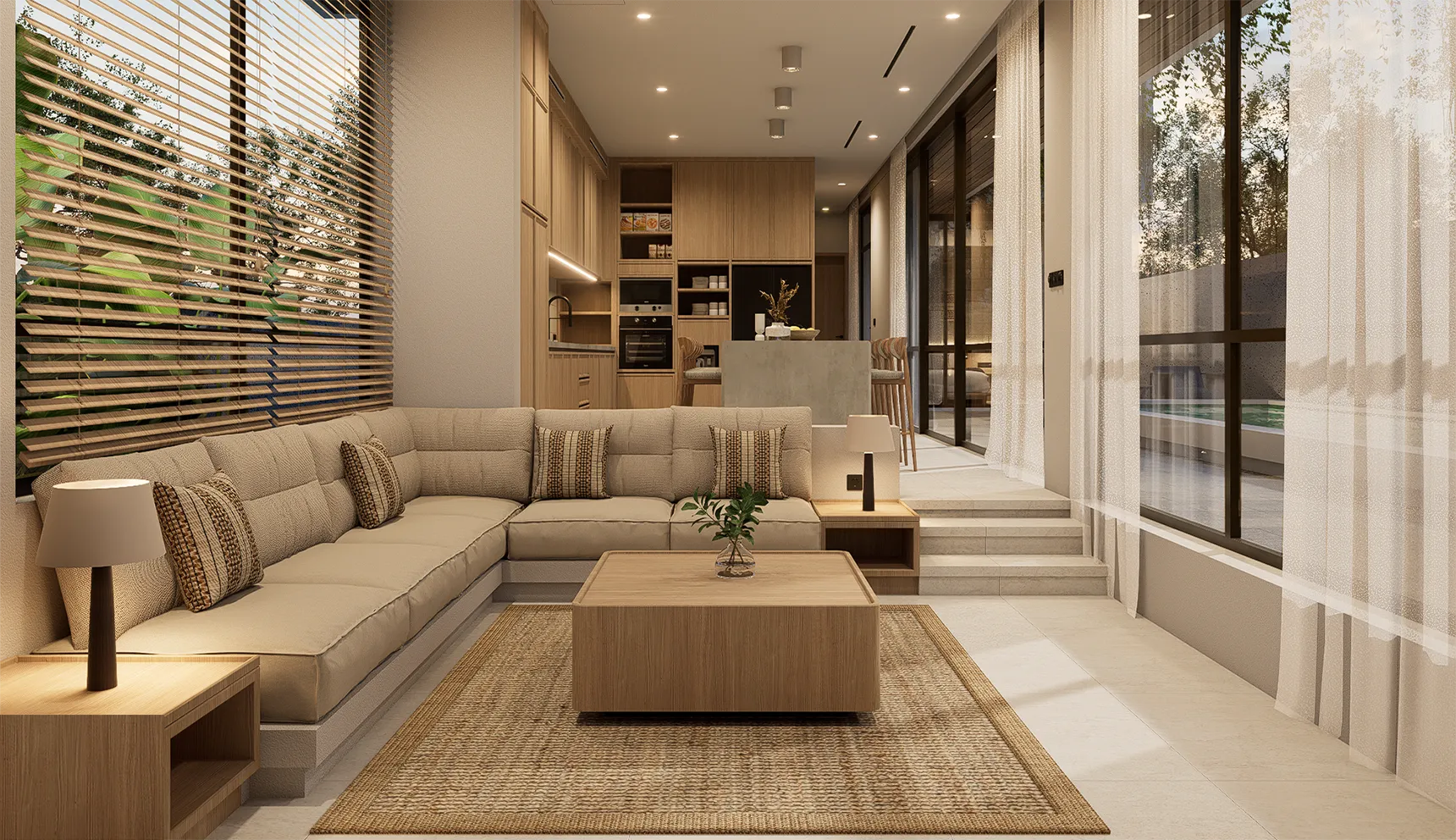
A Modern Tropical Approach: TJ Villa by Samma Studio
One of the clearest examples of Samma Studio's approach to villa interior design is TJ Villa in Kedungu.
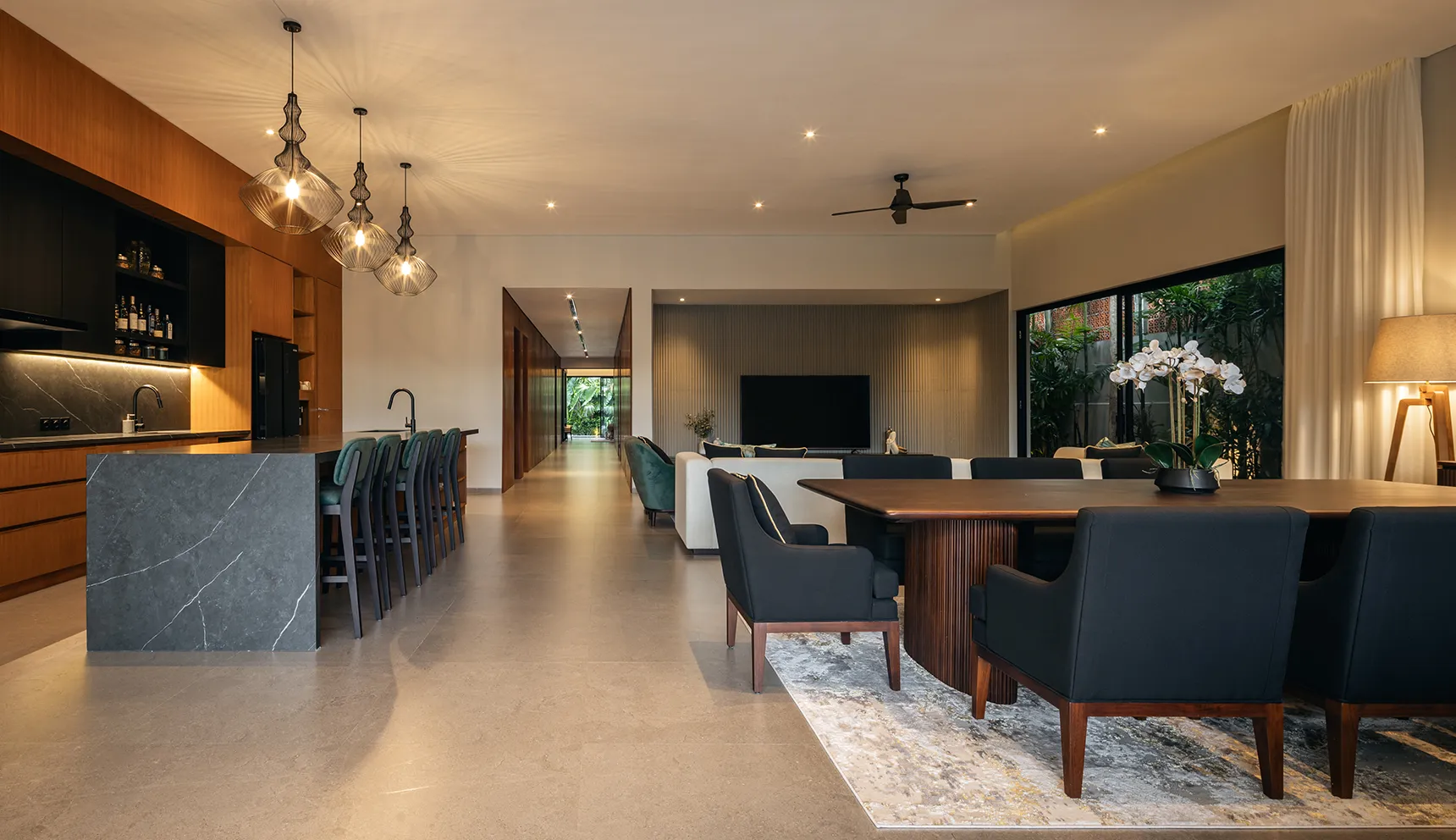
The project combines contemporary living with subtle Balinese influences, using natural finishes, textured stone, warm lighting, and carefully considered details to create a relaxed residential atmosphere.
Rather than relying on obvious tropical decoration, the character comes through the materials and the relationship between the spaces.
1. A Warm and Natural Material Palette
Timber and natural stone create much of the interior's visual warmth.
The combination is restrained enough to maintain a contemporary character while still giving the spaces a tactile quality.
This approach demonstrates how natural materials can be used without making the interior feel overly themed or traditionally tropical.
2. Lighting as Part of the Atmosphere
Lighting plays an important role in changing the character of the villa after sunset.
Warm illumination highlights textures and architectural elements while maintaining the relaxed atmosphere of the interiors.
This is particularly important in a villa where indoor and outdoor spaces are experienced throughout the evening.
3. The Kitchen as a Social Space
At TJ Villa, the kitchen becomes more than a practical workspace.
The long kitchen island contributes to the social character of the home, allowing cooking, dining, and conversation to happen within the same area.
This illustrates a broader principle in villa interior design: functional spaces can also become important parts of the home's social experience.
What to Consider Before Designing a Villa Interior in Bali
Before starting an interior project, it is useful to establish several practical questions.
- How will the villa be used?
A private residence and an investment property may have different priorities for durability, privacy, storage, and maintenance. - How does the interior respond to the site?
Views, orientation, landscape, sunlight, and existing architecture can all influence the interior layout. - Which materials are appropriate for Bali's climate?
Humidity, heat, sunlight, and maintenance should be considered alongside appearance. - How should indoor and outdoor spaces connect?
The relationship between living areas, terraces, gardens, and pools can significantly influence the experience of a Bali villa. - How much should be customised?
Built-in furniture and custom joinery can make an interior more functional and distinctive, but they also require more detailed planning. - Should architecture and interior design be developed together?
For a new villa, coordinating the two disciplines from the beginning can help create a more cohesive result.
Choosing the Right Approach for Your Bali Villa
There is no single formula for creating a successful villa interior in Bali.
The right approach depends on the property, its location, architecture, intended use, and the people who will experience it.
A private villa surrounded by rice fields may require a very different interior strategy from a contemporary property near the coast. Similarly, a holiday rental may have different priorities from a permanent residence.
Before deciding on a particular style, it is useful to consider a few fundamental questions.
1. Start With the Architecture
Interior design should not feel disconnected from the building around it.
The position of windows, ceiling heights, structural elements, circulation, and relationships between rooms all influence the interior experience.
For a new villa, considering architecture and interiors together can create a more cohesive result. For an existing property, the interior design can instead respond to the architectural character that is already there.
This is particularly relevant when renovating an existing Bali villa, where preserving certain architectural elements can give the new interior a stronger sense of identity.
2. Consider the Landscape
The landscape surrounding a villa can become one of its most important design elements.
A garden, pool, courtyard, or distant view can influence furniture placement, window openings, colour choices, and the orientation of key spaces.
Rather than treating landscape as decoration, it can be incorporated into the experience of the interior itself.
3. Design for the Way the Property Will Be Used
The intended use of the villa should influence almost every major interior decision.
A private family residence may prioritise storage, privacy, and long-term comfort. A holiday villa may place greater emphasis on guest experience, durability, entertaining areas, and ease of maintenance.
Understanding this distinction early helps the design remain practical as well as visually compelling.
Working With an Architecture and Interior Design Studio
For a villa project in Bali, working with a design studio can help bring architectural, interior, and environmental considerations together from the beginning.
The value is not simply in selecting colours or furniture.
A studio can help translate the initial concept into spatial planning, material specifications, lighting, custom elements, and detailed design decisions.
For a new-build project, this coordination can happen alongside the architectural process.
For a renovation, the focus may instead be on understanding the existing structure and identifying which elements should be preserved, adapted, or replaced.
The right approach depends on the project.
What matters is having a clear design direction and ensuring that the individual decisions remain connected to the overall concept.
A Considered Approach to Villa Design in Bali
At Samma Studio, villa design is approached as a relationship between people, space, and nature.
This means considering more than the appearance of individual rooms.
The experience of moving through the villa, the way light enters a space, the transition between inside and outside, the tactility of materials, and the relationship with the surrounding landscape all contribute to the final result.
The studio's portfolio reflects different interpretations of this approach, from contemporary residences to renovations and tropical villas across Bali.
Explore Samma Studio's residential projects to see how different sites, architectural conditions, and client requirements are translated into individual design responses.
Planning Your Bali Villa Interior
If you are planning a new villa or renovating an existing property, the interior is worth considering from the earliest stages of the project.
Start by understanding the site and how the property will be used.
From there, establish the spatial relationships, architectural direction, material palette, lighting strategy, and connection with the landscape.
The details can then follow.
A successful modern tropical interior is rarely the result of one spectacular design feature. It comes from many decisions working together.
The best interiors feel considered without feeling over-designed.
They provide the comfort and functionality expected from a contemporary home while maintaining a clear relationship with Bali's environment.
If you are developing a villa project in Bali and would like to discuss the design approach, get in touch with Samma Studio.
Villa Interior Design in Bali - Frequently Asked Questions
- What is modern tropical villa interior design in Bali?
Modern tropical villa interior design combines contemporary planning with natural materials, indoor-outdoor living, natural light, ventilation, and a strong connection to the surrounding environment. - What materials work well for Bali villa interiors?
Timber, natural stone, terrazzo, cement tiles, rattan, and other natural or tactile materials can work well when selected according to their location, exposure, maintenance requirements, and overall design concept. - How does Bali's climate affect villa interior design?
Heat, humidity, sunlight, and seasonal rainfall can influence material selection, ventilation, shading, furniture, finishes, and maintenance requirements. - Should interior design and architecture be planned together?
For a new-build villa, coordinating architecture and interior design from the beginning can create better relationships between spaces, openings, materials, lighting, and circulation. - Can a Bali villa have a modern interior without traditional Balinese elements?
Yes. A villa can feel connected to Bali through its materials, landscape, climate response, proportions, craftsmanship, and indoor-outdoor relationship without directly reproducing traditional architectural details. - How do I choose an interior design studio for a Bali villa?
Look beyond visual style and consider the studio's experience, design approach, understanding of Bali's environment, project portfolio, technical capabilities, and ability to coordinate design through implementation.