Publication
Villa Interior Design Trends in Bali for 2026
by samma studio
July 21, 2026
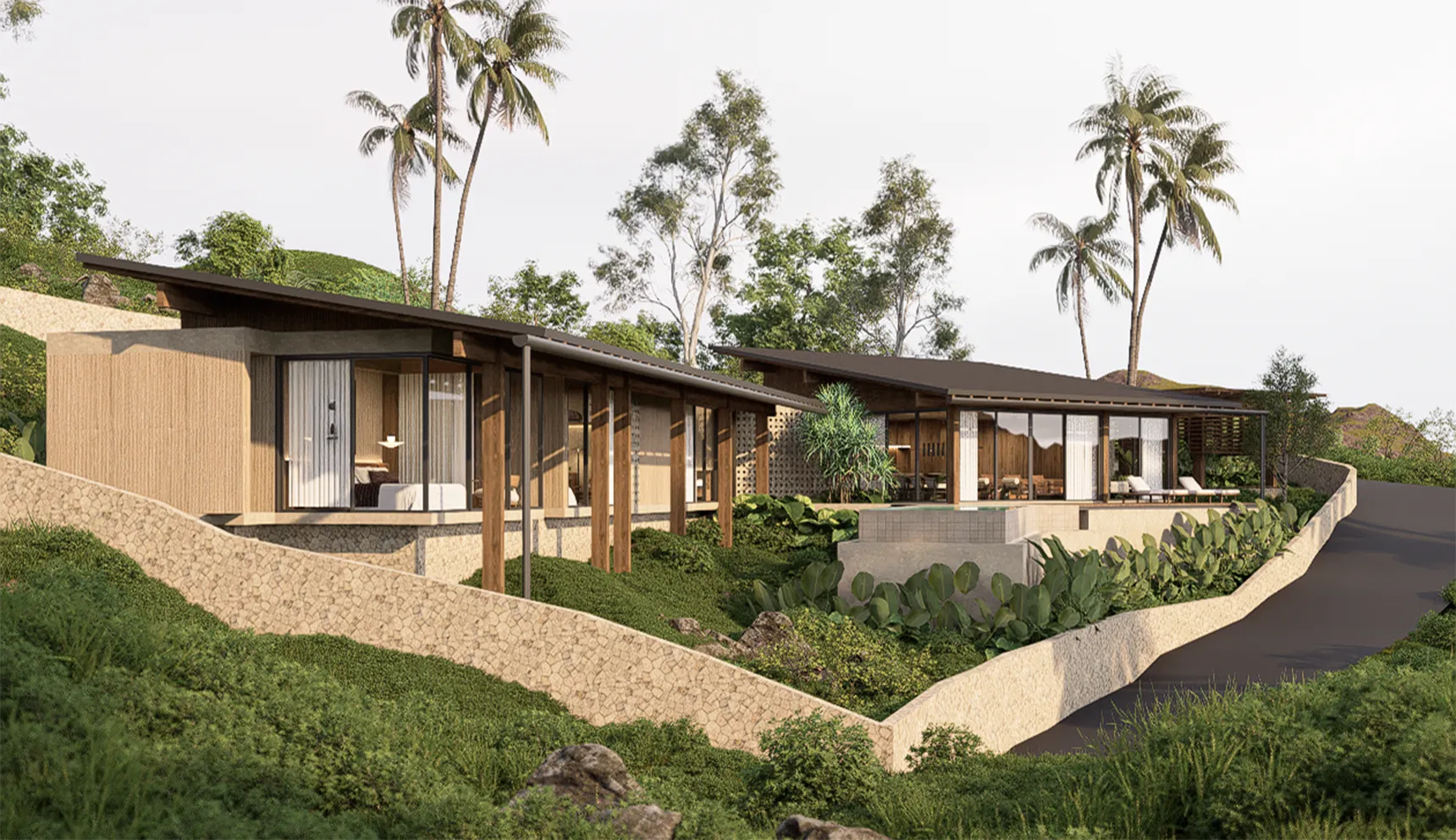
Bali continues to inspire homeowners, investors, and hospitality developers seeking villa interiors that balance comfort, functionality, and timeless aesthetics. As lifestyles evolve, villa interior design in Bali is no longer defined by luxurious finishes alone. Today's interiors are shaped by tropical living, natural materials, wellness, and a stronger connection between indoor spaces and the surrounding landscape.
In 2026, interior designers are embracing thoughtful approaches that maximize natural light, improve spatial flow, and create environments that feel calm and inviting throughout the day. Rather than following short-lived design trends, successful villa interiors respond to Bali's tropical climate while supporting everyday living.
Whether you're designing a private residence, a holiday villa, or a hospitality project, understanding these emerging interior design trends can help create spaces that remain beautiful, functional, and relevant for years to come.
Why Bali Inspires Contemporary Villa Interior Design
Bali has become a global source of inspiration for contemporary villa interior design, where tropical living, local craftsmanship, and modern aesthetics come together in harmony. Rather than simply following international design trends, interiors in Bali are shaped by the island's unique environment, cultural heritage, and relaxed way of life.
The tropical climate encourages open, breathable interiors that maximize natural light and ventilation, while handcrafted materials such as natural stone, reclaimed timber, rattan, and woven textiles add warmth and authenticity. These elements create spaces that feel both refined and deeply connected to their surroundings.
Another defining characteristic of villa interiors in Bali is the seamless relationship between indoor and outdoor living. Living areas often extend toward gardens, terraces, or swimming pools, creating a continuous spatial experience that enhances comfort and encourages a closer connection with nature.
Trend #1 – Seamless Indoor-Outdoor Living
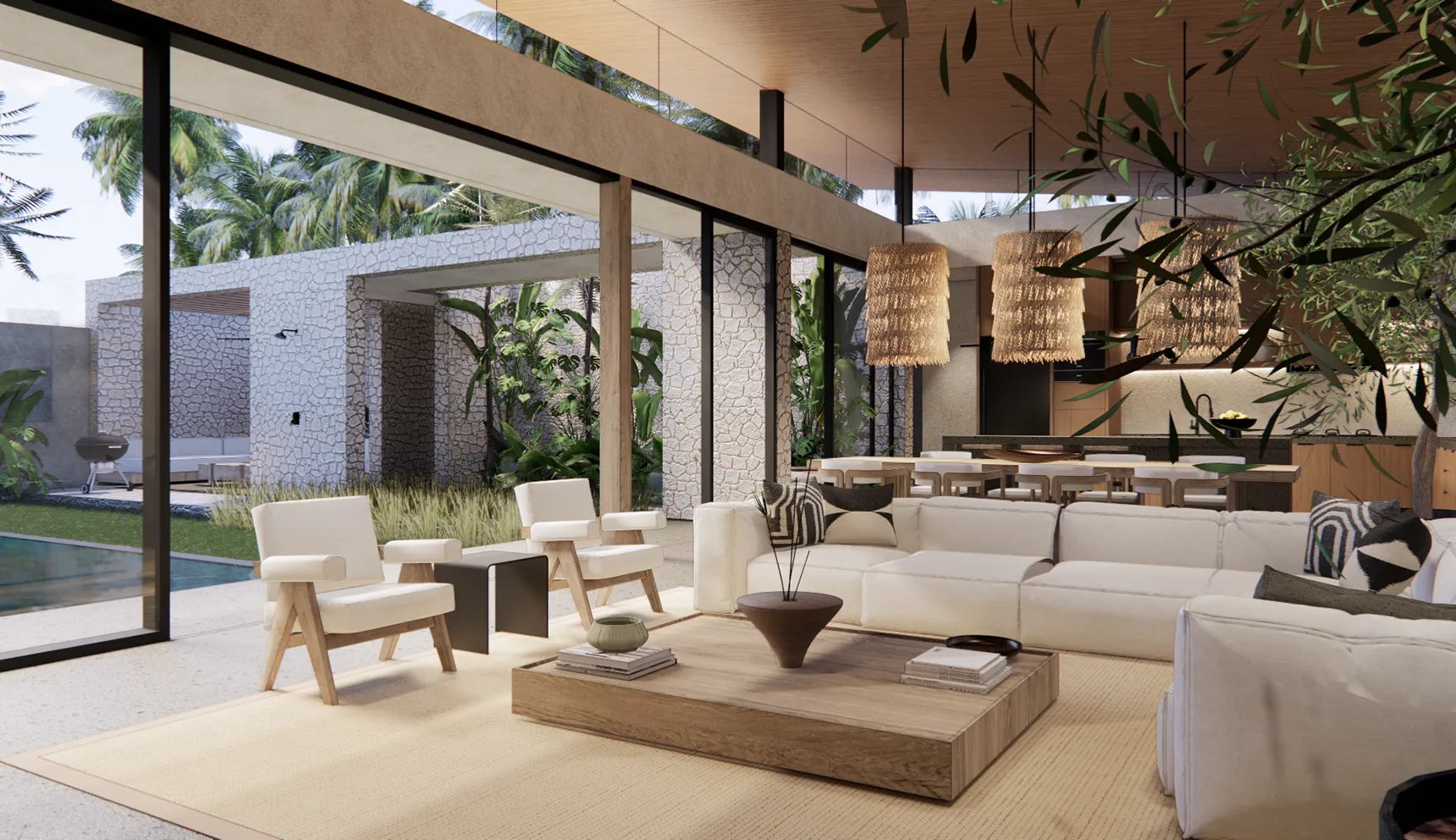
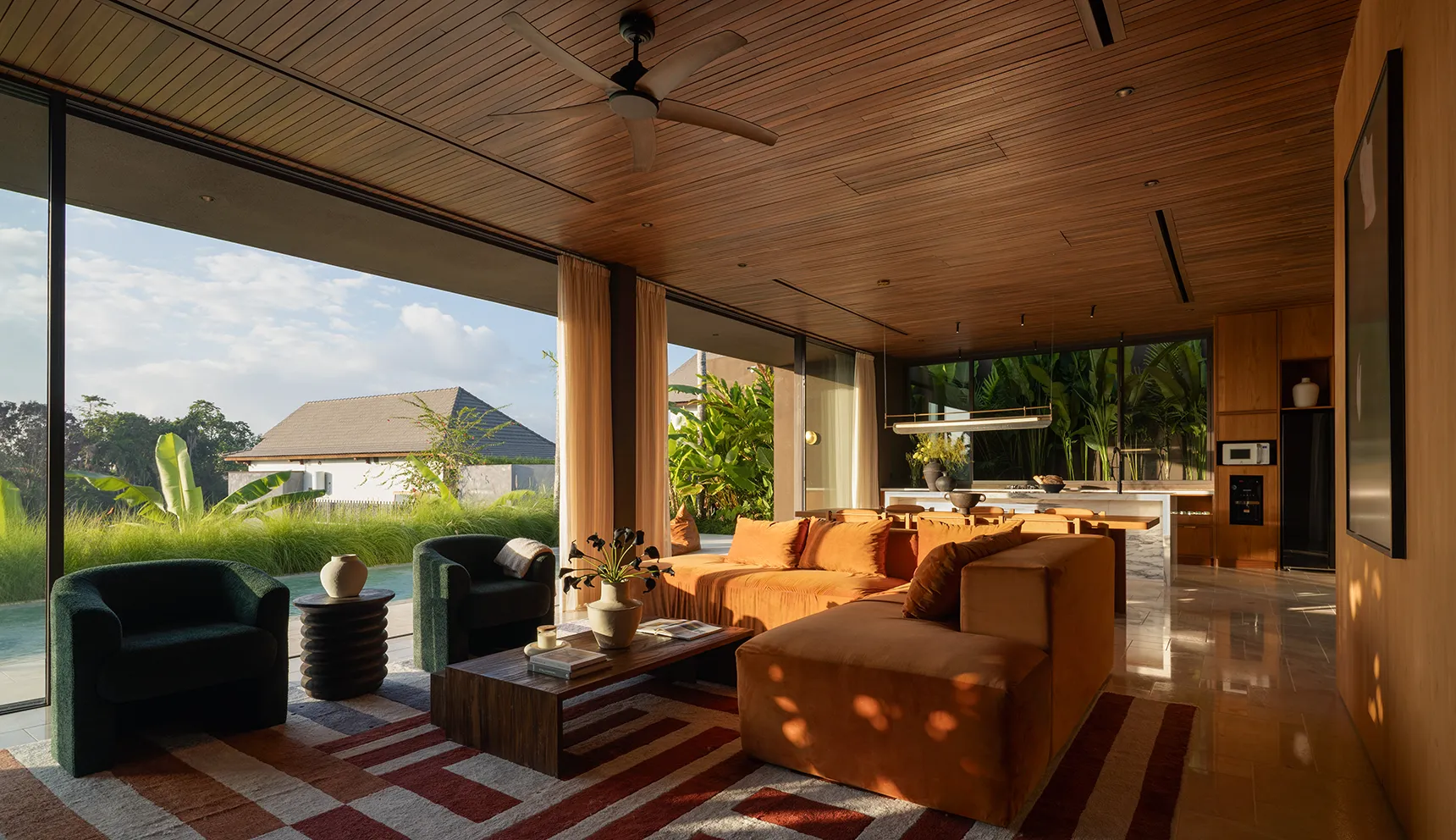
One of the defining characteristics of villa interior design in Bali is the seamless connection between interior spaces and the surrounding landscape. Rather than separating indoor and outdoor areas, modern villas are designed to create one continuous living experience.
- Key Design Features
- Large sliding glass doors that blur the boundary between indoors and outdoors.
- Open-plan living and dining areas that improve flexibility.
- Outdoor lounges that function as an extension of the interior.
- Consistent flooring materials to create visual continuity.
- Natural cross ventilation that improves comfort throughout the day.
- Why It Matters
This approach allows natural light and fresh air to become part of the interior experience while making spaces feel brighter, more spacious, and more connected to nature. - Interior Designer's Insight
Creating seamless indoor-outdoor living is not simply about installing larger glass doors. Designers carefully consider furniture placement, circulation, privacy, and material transitions to ensure every space remains functional, comfortable, and visually balanced throughout the day.
Trend #2 – Natural Materials and Contemporary Tropical Interiors
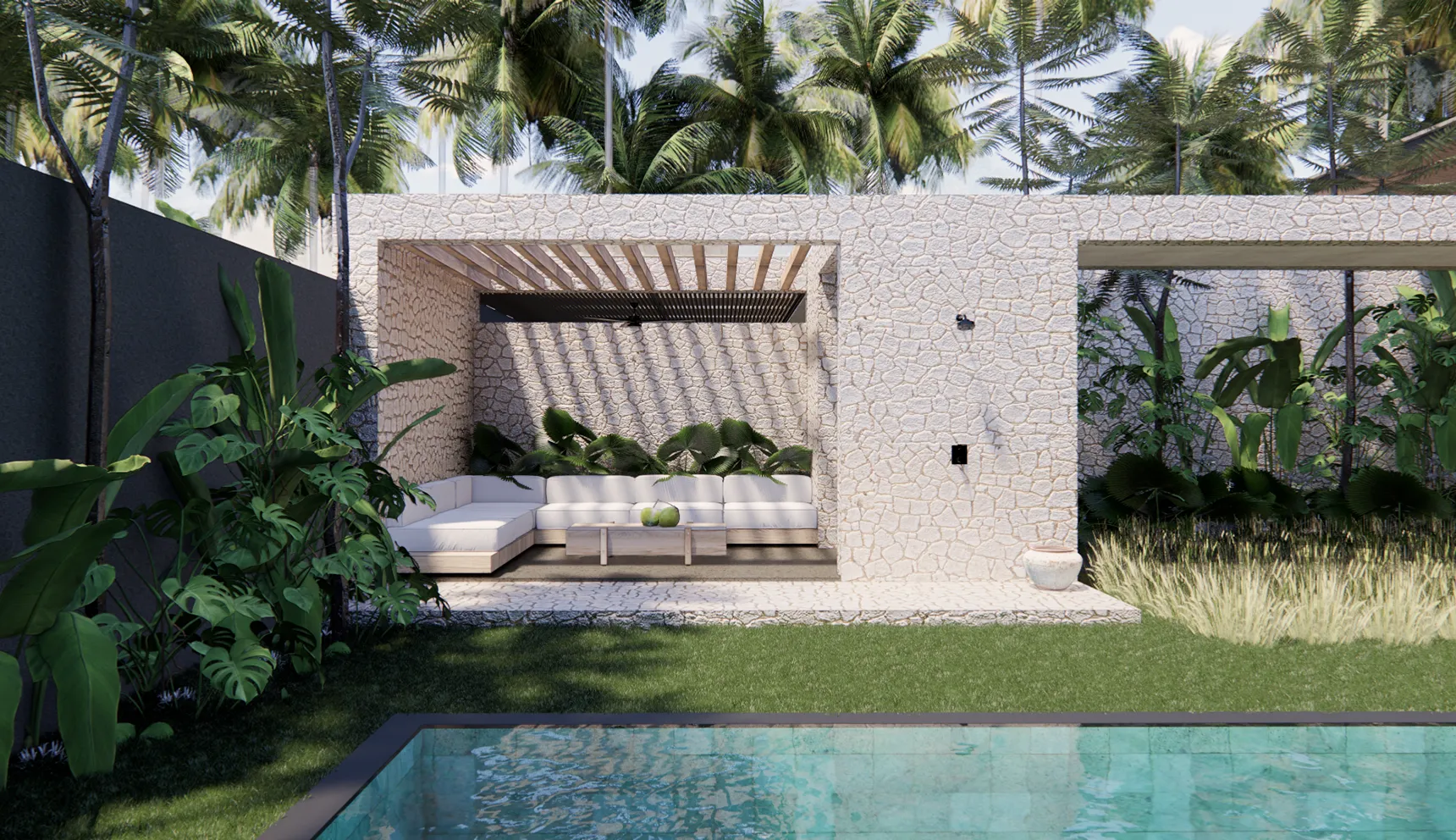
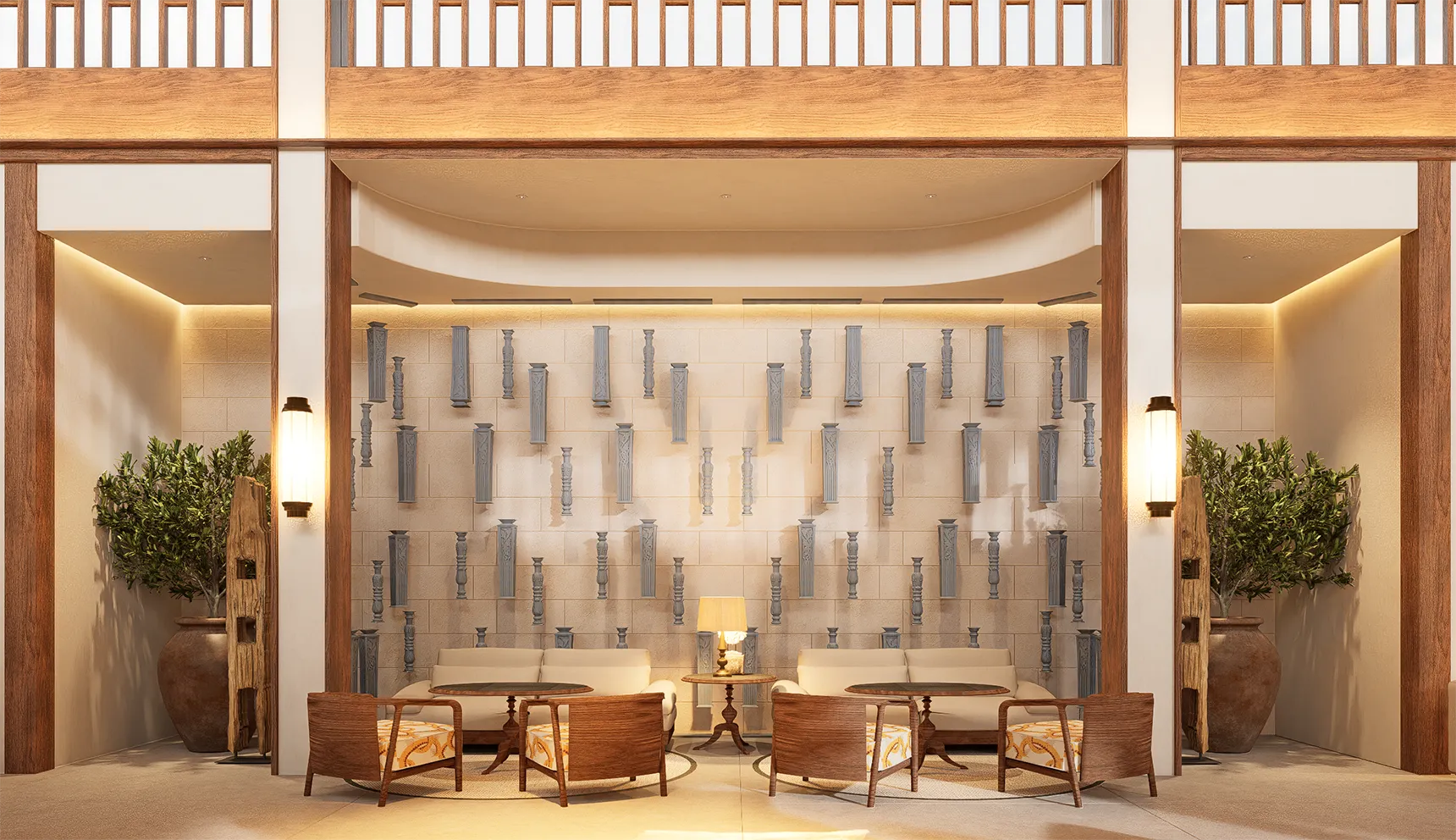
Natural materials continue to define contemporary villa interiors in Bali. Instead of relying on polished finishes alone, designers are embracing textures that bring warmth, authenticity, and a stronger connection to nature.
- Popular Materials in 2026
- Travertine and limestone for flooring and feature walls.
- Reclaimed timber for furniture and custom joinery.
- Linen and cotton fabrics for breathable comfort.
- Rattan and woven details that celebrate local craftsmanship.
- Handmade ceramics and decorative accessories.
- Why It Matters
Natural textures create interiors that age gracefully while responding well to Bali's tropical climate. Combined with soft, neutral colour palettes, these materials help create spaces that feel timeless rather than trend-driven. - Interior Designer's Insight
Rather than mixing many materials, successful tropical interiors usually focus on a limited palette of complementary textures. This creates visual harmony while allowing each material to become a feature in its own right.
Trend #3 – Wellness-Centered Interior Spaces
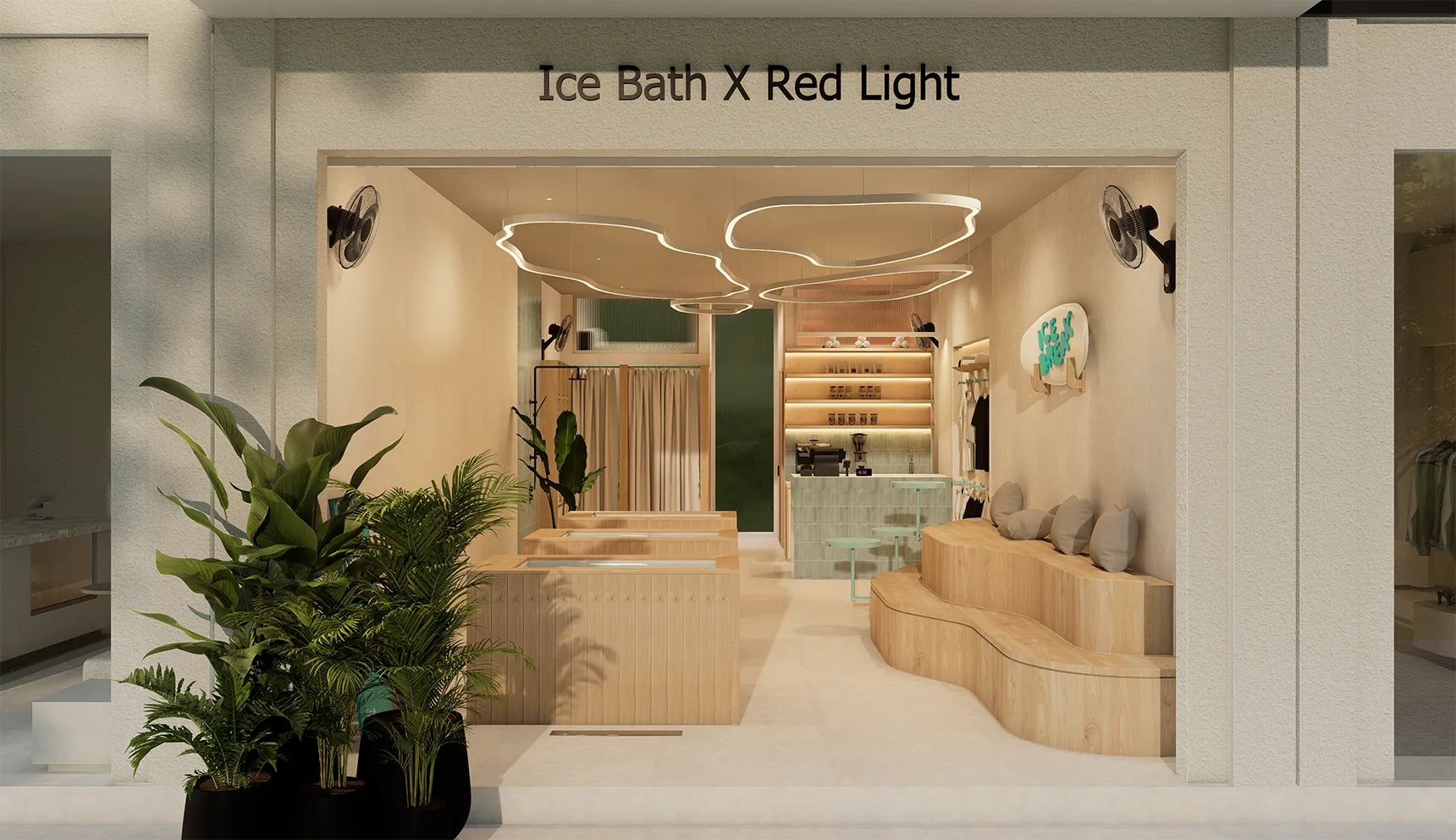
Villa interiors are increasingly designed to support physical wellbeing, mental relaxation, and healthier daily routines. Wellness is no longer an additional feature but an important part of how people experience their homes.
- Common Wellness Features
- Spa-inspired bathrooms.
- Yoga or meditation rooms.
- Reading corners with natural daylight.
- Indoor plants that improve ambience.
- Soft ambient lighting.
- Calm neutral colour palettes.
- Why It Matters
Well-designed wellness spaces encourage slower living and create an environment that supports relaxation throughout the day. - Interior Designer's Insight
Wellness is influenced not only by furniture or decoration but also by spatial planning. Natural light, acoustic comfort, ventilation, and visual connections to gardens all contribute to creating interiors that feel restorative.
Trend #4 – Sustainable Interior Design
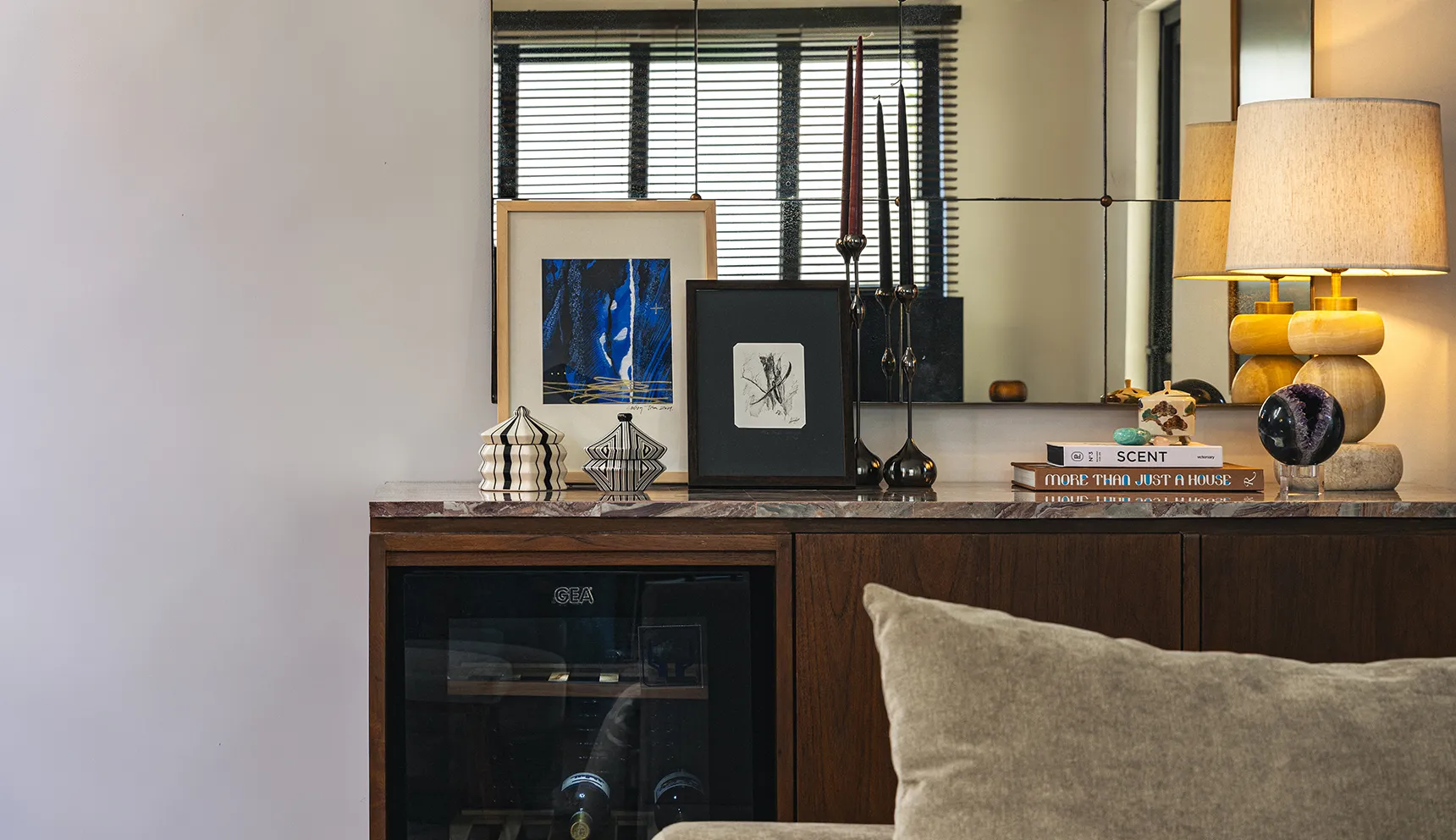
Sustainability has become more than a design trend—it is now a key consideration in creating villa interiors that are beautiful, functional, and built to last. In Bali, interior designers are increasingly prioritizing materials and design choices that reduce environmental impact while enhancing the overall living experience.
- Key Design Features
- Responsibly sourced timber and locally made furniture.
- Low-VOC paints and finishes that improve indoor air quality.
- Energy-efficient lighting throughout the villa.
- Recycled and natural materials for furniture and décor.
- Durable finishes that require minimal maintenance over time.
- Why It Matters
Sustainable interior design creates healthier living environments while reducing long-term maintenance and resource consumption. Choosing locally sourced materials also supports local artisans and minimizes the environmental impact of transportation. Rather than following short-lived design trends, sustainable interiors focus on quality, longevity, and timeless appeal. - Interior Designer's Insight
Sustainability begins long before selecting furniture or finishes. Interior designers carefully evaluate how materials perform in Bali's tropical climate, considering humidity, sunlight, and daily use. By choosing materials that age gracefully and require less maintenance, villa interiors remain functional and visually appealing for many years.
Trend #5 – Personalized and Flexible Living Spaces
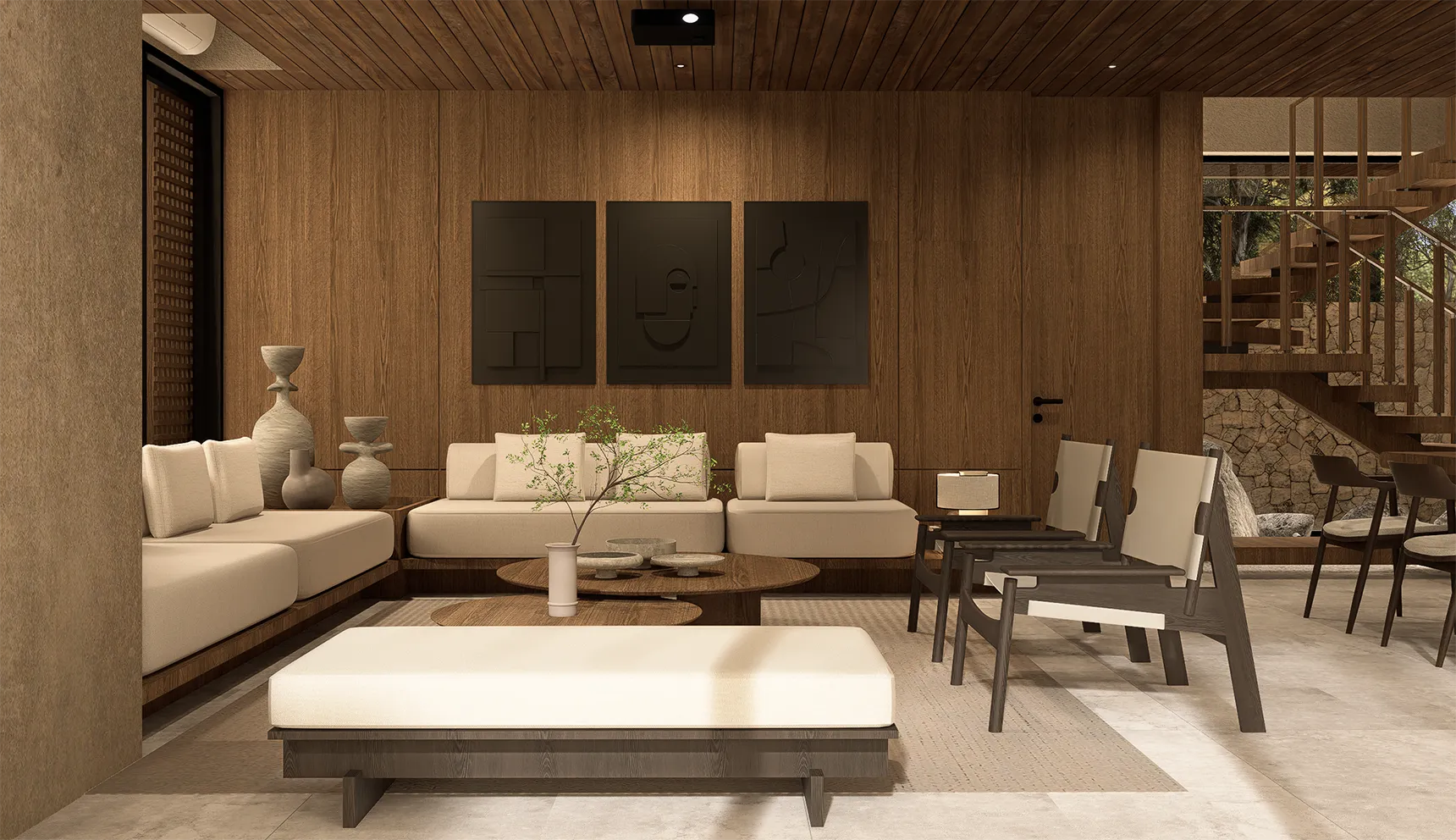
Modern villa interiors are no longer designed around fixed functions. Instead, they are becoming more adaptable, allowing homeowners to personalize spaces that support work, relaxation, entertainment, and everyday living. As lifestyles continue to evolve, flexibility has become an essential aspect of villa interior design in Bali.
- Key Design Features
- Multi-functional rooms that can adapt to different activities.
- Dedicated home offices with integrated storage.
- Reading nooks and quiet corners for relaxation.
- Built-in furniture that maximizes space efficiency.
- Guest rooms that can easily transform into hobby or wellness spaces.
- Why It Matters
A well-designed interior should evolve alongside its occupants. Flexible layouts allow homeowners to make better use of every square metre without compromising aesthetics or comfort. Rather than creating rooms that serve a single purpose, designers focus on spaces that remain practical for years to come. - Interior Designer's Insight
Personalization goes beyond selecting colours or furniture. Interior designers study how people live, move, and interact within a home before defining each space. By understanding daily routines and future lifestyle needs, every room can be tailored to provide greater comfort, functionality, and long-term value.
Materials Defining Villa Interior Design in Bali for 2026
Material selection plays a significant role in shaping the atmosphere of a villa. In Bali, designers increasingly combine natural textures with refined contemporary finishes to create interiors that feel warm, timeless, and connected to the surrounding landscape.
1. Natural Stone
Travertine, limestone, and other natural stones remain popular choices for flooring, feature walls, and bathrooms. Their organic textures introduce depth while helping regulate indoor temperatures in tropical environments.
2. Reclaimed Timber
Reclaimed timber adds warmth, authenticity, and character to interior spaces. Whether used for furniture, ceiling details, or custom joinery, it creates a timeless aesthetic while supporting more sustainable design practices.
3. Textured Concrete
Textured concrete provides a clean, understated backdrop that pairs beautifully with timber, stone, and soft furnishings. Its subtle finish complements contemporary interiors while offering durability and low maintenance.
4. Locally Crafted Finishes
Handcrafted furniture, woven rattan, artisan ceramics, custom woodwork, and locally made decorative pieces celebrate Bali's rich craftsmanship. These carefully selected details give every villa a distinctive identity while strengthening the connection between design and local culture.
How Samma Studio Approaches Villa Interior Design
At Samma Studio, every interior begins with understanding the people who will experience the space. Rather than applying a signature style to every project, our design process responds to each villa's architecture, surrounding landscape, and the lifestyle of its future occupants.
By carefully considering spatial flow, material selection, natural light, furniture, and the relationship between indoor and outdoor living, we create interiors that feel both functional and timeless. Our human-centered approach combines tropical design principles with contemporary aesthetics to deliver spaces that remain comfortable, elegant, and connected to their environment.
Explore our Residential Projects, Interior Design Services, and Architecture Services, or Contact our team to discuss your vision for a villa interior in Bali.
Villa Interior Design Trends in Bali for 2026 - Frequently Asked Questions
- What are the biggest villa interior design trends in Bali for 2026?
The leading villa interior design trends in Bali for 2026 include seamless indoor-outdoor living, natural materials, wellness-focused interiors, sustainable design, personalized living spaces, and interiors that respond to Bali's tropical climate. - What defines modern villa interior design in Bali?
Modern villa interior design in Bali combines contemporary aesthetics with tropical living principles. Natural materials, open layouts, handcrafted finishes, abundant natural light, and strong connections to outdoor spaces create interiors that feel both elegant and comfortable. - Is tropical interior design still relevant in 2026?
Yes. Tropical interior design remains highly relevant because it responds naturally to Bali's climate while improving comfort, ventilation, and everyday living. By combining climate-appropriate materials with timeless design principles, tropical interiors continue to offer lasting value for modern villas. - What materials are commonly used in Bali villa interior design?
Natural stone, reclaimed timber, rattan, linen, textured concrete, and handcrafted finishes are among the most popular materials used in Bali villa interiors. These materials add warmth, durability, and authenticity while complementing the island's tropical environment and contemporary design aesthetic. - How can interior design improve comfort in a tropical villa?
Well-planned interior design enhances comfort by maximizing natural ventilation, optimizing daylight, selecting breathable materials, and creating seamless connections between indoor and outdoor spaces. These design strategies help maintain a comfortable living environment while reducing reliance on artificial cooling. - Why should I work with an interior designer for a villa project in Bali?
An experienced interior designer understands how to balance aesthetics, functionality, and climate-responsive design. They can help optimize spatial planning, select materials suited to Bali's tropical conditions, coordinate custom furniture and finishes, and create interiors that reflect your lifestyle while complementing the villa's architecture.